研究目的
Development of an intensity (and not wavelength shift) based fiber inclinometer, realized through employment of standard single-mode fiber, capable of angular measurement up to 135°.
研究成果
The study demonstrates a phase control method with low loss and flexibility for estimating the angle of inclination using an all-fiber FLM configuration. It achieves two stages of measurement sensitivity in one system and allows direct measurement of the angle from light intensity, making it a simple and cost-effective solution.
研究不足
The small variations in the simulated and experimental responses and sensitivities may be attributed to the change, in phase of the CW and CCW propagating waves, originated due to the additional stress produced in the fiber loop of the FLM.
1:Experimental Design and Method Selection:
The study employs a single-mode fiber loop mirror (FLM) configuration with two-phase shifters (PSs) to control the phase of light waves. Jones calculus is used to derive the relationship between inclination angles and transmitted light power.
2:Sample Selection and Data Sources:
Standard single-mode fiber (SMF-28 Ultra Optical Fiber) is used for the optical fiber. The light source is an Erbium-doped fiber amplifier (EDFA) integrated device.
3:List of Experimental Equipment and Materials:
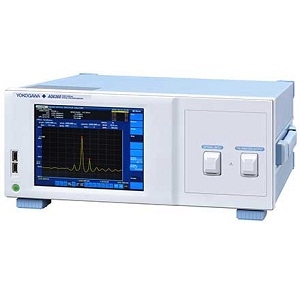
Includes SMF, EDFA, fusion splicer, paddle-type phase shifters, and optical spectrum analyzer (OSA).
4:Experimental Procedures and Operational Workflow:
The FLM is constructed by splicing the output ports of a 2 × 2 fiber coupler. PS1 and PS2 are rotated to measure transmitted light power variations.
5:Data Analysis Methods:
The transmitted light power is analyzed using Jones calculus and compared with experimental results obtained from the OSA.
独家科研数据包���,助您复现前沿成果�,加速创新突破
获取完整内容