研究目的
Investigation of cut quality in fiber laser cutting of CFRP, focusing on how cut quality factors change as laser power, scanning speed, and the number of laser passes are varied.
研究成果
The study concluded that the beam scanning speed is a dominant factor for minimizing thermal damages. Circular rings observed in each carbon fiber at the cut surfaces were generated when each fiber was thermally fused in the radial direction. A larger number of laser passes contributes to a smooth surface morphology, preventing fiber delamination and pull-outs. Optimum process conditions were identified by comparing various cut quality factors.
研究不足
The study did not use an assist gas, which could decrease the charring by decreasing the exposure to oxygen. The matrix damage zone appears to be large, reaching a few millimeters outside the matrix recession zone, which is aesthetically bad.
1:Experimental Design and Method Selection:
A systematic experiment was designed on a large process window to study the effects of laser power, scanning speed, and the number of passes on cut quality factors.
2:Sample Selection and Data Sources:
1 mm thick CFRP sheets were fabricated by vacuum-assisted resin transfer molding (VARTM).
3:List of Experimental Equipment and Materials:
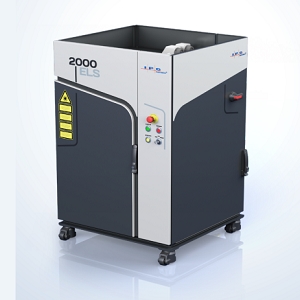
A 2 kW multi-mode fiber laser (IPG YLS-2000) with a wavelength of 1070 nm was used.
4:Experimental Procedures and Operational Workflow:
Specimens were processed using a motorized linear stage with a fixed laser beam, and multi-pass cutting was employed with a time interval of 1 s between the passes.
5:Data Analysis Methods:
Kerf width and MEW were measured by using SEM and kerf depth by using OM. Statistical analysis was conducted to identify the best single correlation parameter for each cut quality factor.
独家科研数据包�����,助您复现前沿成果����,加速创新突破
获取完整内容