研究目的
Investigating the effect of various laser processing parameters on the cutting quality of CFRP, including laser power, scan speed, gas pressure, and duty cycle, with a focus on kerf width and heat affected zone (HAZ).
研究成果
Laser power and scan speed significantly affect kerf width and HAZ in CFRP cutting, with higher power increasing both and higher speed reducing them. Matrix vaporisation and fibre pullout are major defects, with matrix presence preventing pullout in some cases. Duty cycle and gas pressure have less predictable effects on cut quality.
研究不足
The study focused on a specific thickness of CFRP (1.15 mm) and used argon as the assist gas. The effects of other gases or different material thicknesses were not explored. The non-uniformity of HAZ and kerf width suggests variability in cut quality.
1:Experimental Design and Method Selection
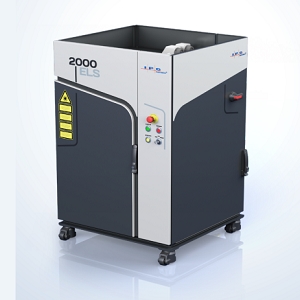
The study utilized a 2 kW Yb-fibre laser for cutting CFRP, focusing on parameters like laser power, scan speed, gas pressure, and duty cycle to analyze their effects on kerf width and HAZ.
2:Sample Selection and Data Sources
CFRP of about 1.15 mm thickness with cross-woven carbon fibres and epoxy resin matrix was used. The samples were analyzed using optical microscopy, SEM, and EDS.
3:List of Experimental Equipment and Materials
2 kW Yb-fibre laser (IPG, YLR-2000), optical microscopy (Model-ZEISS Zoom: Germany), Scanning Electron Microscopy (Model-ZEISS EVO 18 with Oxford EDS Detector).
4:Experimental Procedures and Operational Workflow
The experiments involved varying laser power, scan speed, gas pressure, and duty cycle to cut CFRP samples, followed by analysis of kerf width and HAZ using optical microscopy, SEM, and EDS.
5:Data Analysis Methods
The analysis included measuring kerf width and HAZ from optical microscopy images, and qualitative assessment of cut quality and defects using SEM and EDS.
独家科研数据包��,助您复现前沿成果���,加速创新突破
获取完整内容