研究目的
Tracking and detecting the motion of broadband light in millimeter to nanometer scale and demonstrating ultrabroadband photodetection from 400 nm to 10.768 μm using graphene integrated with an optical fiber Bragg grating device.
研究成果
The integration of graphene with an optical FBG device enables tracking and detecting the motion of light with millimeter precision and ultrabroadband photodetection from 400 nm to 10.768 μm. The graphene-Bi2Te3 heterostructure shows enhanced photoresponse and stability, opening up potential applications in various fields.
研究不足
The study is limited by the resolution of the optical spectrum analyzer and the absorption efficiency of graphene. Future work could explore higher resolution interrogator systems and enhanced absorption structures.
1:Experimental Design and Method Selection:
The study integrates graphene with an optical fiber Bragg grating (FBG) device to track and detect the motion of light and demonstrate ultrabroadband photodetection. Theoretical models include the Bragg wavelength shift due to photoinduced thermo-optic effect.
2:Sample Selection and Data Sources:
CVD-grown graphene and graphene-Bi2Te3 heterostructure were used. The samples were characterized using optical microscopy, SEM, Raman spectroscopy, and AFM.
3:List of Experimental Equipment and Materials:
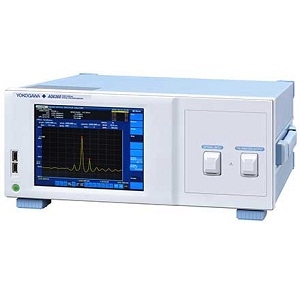
Optical spectrum analyzer (Yokogawa, AQ6370C), confocal micro-Raman system (WITec alpha 300R), UV–vis-IR spectrometer (Newport, Pviv-211v), and atomic force microscope (Bruker, Dimension Icon).
4:Experimental Procedures and Operational Workflow:
Graphene was transferred onto the FBG device. Light motion tracking and photodetection measurements were conducted using various light sources and analyzed with an optical spectrum analyzer.
5:Data Analysis Methods:
The shift in the Bragg wavelength was analyzed to determine the photoresponse and light motion tracking capability.
独家科研数据包�����,助您复现前沿成果�����,加速创新突破
获取完整内容