研究目的
To study the effects of power modulation on energy coupling efficiency in infrared laser welding of highly-reflective materials, specifically AZ31 magnesium alloy, and to explore the underlying mechanisms through keyhole evolution and pressure distribution analysis.
研究成果
Power modulation significantly improves energy coupling efficiency in laser welding of highly-reflective materials like AZ31 magnesium alloy. The optimal modulation frequency was found to be 100 Hz, with an improvement in energy coupling efficiency of about 1.56 times. The key mechanism is the formation and maintenance of a deep keyhole due to sufficient recoil pressure at the bottom of the keyhole, even when instantaneous power decreases.
研究不足
The study focuses on AZ31 magnesium alloy and Q345 steel, and the findings may not be directly applicable to other materials. The experimental conditions and parameters are specific to the setup used, and variations in equipment or conditions may affect results.
1:Experimental Design and Method Selection:
Orthogonal design was used to study the effects of power modulation on laser welding of magnesium alloy, comparing constant-power and modulated-power laser welding. High-speed imaging was employed to observe keyhole evolution.
2:Sample Selection and Data Sources:
AZ31 magnesium alloy plates and Q345 steel plates were used as test materials. The absorptivity of these materials for infrared laser was measured.
3:List of Experimental Equipment and Materials:
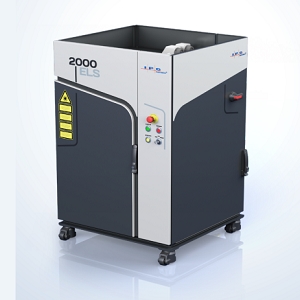
An IPG YLS-4000 fiber laser with a focus diameter of 0.2 mm was used. Sinusoidal modulation on laser power was realized through a function generator.
4:2 mm was used. Sinusoidal modulation on laser power was realized through a function generator.
Experimental Procedures and Operational Workflow:
4. Experimental Procedures and Operational Workflow: Laser welding tests were conducted with varying power, speed, and defocusing amounts. The fusion zone area was calculated to characterize energy coupling efficiency.
5:Data Analysis Methods:
The results of orthogonal designs were analyzed using Minitab software. The relationship between energy coupling efficiency and modulation parameters was modeled.
独家科研数据包,助您复现前沿成果�����,加速创新突破
获取完整内容