研究目的
Investigating the effect of the geometric nozzle configuration on the operating tolerance of the stand-off distance in laser cutting of 60-mm-thick stainless steel using a 6-kW fiber laser.
研究成果
Supersonic nozzles exhibit better operating tolerance for stand-off distance in laser cutting of thick-section stainless steel compared to subsonic nozzles, due to their superior melt-removal capability and shockwave-free gas flow behavior.
研究不足
The study is limited to the laser cutting of 60-mm-thick stainless steel with specific nozzle geometries and may not generalize to other materials or thicknesses. The effect of laser power variations was not explored.
1:Experimental Design and Method Selection:
The study involved interferometric analysis of gas flow behavior from different nozzle types and laser cutting experiments to evaluate the effect of nozzle geometry on stand-off distance tolerance.
2:Sample Selection and Data Sources:
60-mm-thick stainless steel blocks (SUS 304L) were used for cutting experiments.
3:List of Experimental Equipment and Materials:
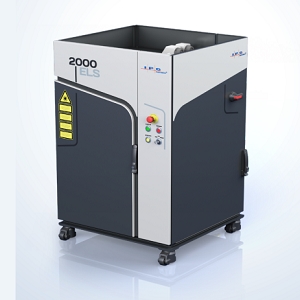
A 6-kW fiber laser (IPG YLS-6000), subsonic and supersonic nozzles with throat diameters of 2 and 3 mm, and a Nomarski interferometer for flow behavior analysis.
4:Experimental Procedures and Operational Workflow:
Laser cutting was performed with varying stand-off distances (1-60 mm) and cutting speeds, with flow behavior analyzed via interferometry.
5:Data Analysis Methods:
Spatial distribution of air density was calculated using Abel inversion and Gladstone-Dale equations from interferometric data.
独家科研数据包�,助您复现前沿成果,加速创新突破
获取完整内容