研究目的
Investigating the effects of a magnetic field on the geometry and tensile strength of laser-welded Ti-6Al-4V joints and understanding the mechanism behind the magnetic-field-induced penetration depth evolution.
研究成果
Applying a magnetic field during laser welding increases the weld penetration depth and fusion zone area, improving the tensile strength of the weld. The magnetic field enhances the utilization of laser energy, providing a new energy-saving method for full-penetration laser welding at lower power. The mechanism involves the transfer of melt from the upper weld pool to the bottom weld pool, promoting melting of the bottom alloys.
研究不足
The study focuses on partial-penetration butt welding, and the effects of a magnetic field in other types of welding (e.g., bead-on-plate welding, overlap welding) are not explored. The magnetic field's impact on weld pool dynamics is complex and requires further investigation.
1:Experimental Design and Method Selection:
Magnetic-field-assisted laser butt welding experiments were performed on Ti-6Al-4V plates to study the effects of a magnetic field on weld geometry and tensile strength.
2:Sample Selection and Data Sources:
Ti-6Al-4V plates with dimensions of 100 mm × 40 mm × 5 mm were used. The intensity of the magnetic field was varied (0 mT, 30 mT, 60 mT, and 90 mT).
3:List of Experimental Equipment and Materials:
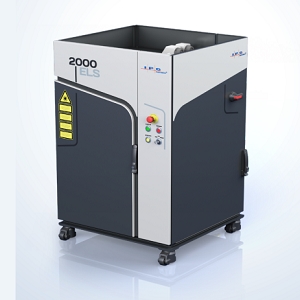
A fiber laser (IPG YLS-4000) with maximum output power of 4 kW, a permanent magnet made of neodymium iron boron, and a Hall sensor for measuring magnetic field intensity.
4:Experimental Procedures and Operational Workflow:
The oxide layer was removed from the surface before welding. The shielding gas was helium at
5:5 m3/h. Metallographic and tensile test samples were prepared and analyzed. Data Analysis Methods:
The areas of the fusion zone and heat-affected zone were calculated by image processing to determine the utilization of laser energy.
独家科研数据包,助您复现前沿成果���,加速创新突破
获取完整内容