研究目的
Investigating the precipitates evolution in the heat affected zone of laser-welded Mg-Gd-Y-Zr alloy in T6 condition.
研究成果
The precipitates evolution presented the varying degree of dissolution of β′ in the heat affected zone. The width of the complete dissolution zone is smaller than that of the partial dissolution and transformation zone. The precipitates evolution in the HAZ mainly represents the partial dissolution and transformation of the β′. The amount of dissolution of the β′ in the HAZ can be determined by staying time above the Tsolvus and the characteristic of precipitates evolution of β′ in the HAZ can be affected by the cooling speed during laser welding.
研究不足
The size of the HAZ for laser-welded Mg-Gd-Y-Zr alloys in T6 condition is relatively small (1 mm to 1.5 mm), making it difficult to investigate the microstructure of the HAZ by using optical observation and measure the temperature distributions.
1:Experimental Design and Method Selection:
The study involved TEM observation to investigate the precipitates evolution in the heat affected zone of laser-welded Mg-Gd-Y-Zr alloy.
2:Sample Selection and Data Sources:
The material used was a rare earth magnesium alloy with a nominal chemical composition of Mg–
3:13 Gd–16 Y–77 Zr (wt%). List of Experimental Equipment and Materials:
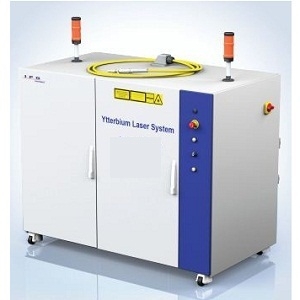
A fiber laser system with maximum output power of 10 kW (IPG YLS-10000, IPG) and a six-axis welding robot (KR60HA, KUKA) were used for laser welding. TEM (JEOL2100, JEOL) and HRTEM (JEOL2100F, JEOL) were used for precipitates morphology observation.
4:Experimental Procedures and Operational Workflow:
Laser welding processes were conducted in the form of butt welding. TEM samples from three different positions in the HAZ were made.
5:Data Analysis Methods:
The precipitates morphology and evolution were analyzed based on TEM images and SAED patterns.
独家科研数据包,助您复现前沿成果����,加速创新突破
获取完整内容