研究目的
Investigating the use of tris-(8-hydroxyquinoline) aluminum (Alq3) as an organic saturable absorber for generating Q-switched pulses in an erbium-doped fiber laser.
研究成果
The Alq3-based Q-switched fiber laser demonstrated stable operation with tunable repetition rates and high pulse energy, indicating its feasibility for use in photonics applications. The simplicity, compactness, and robustness of the system highlight its potential in material engraving and medical treatment.
研究不足
The Q-switching pulses disappeared as the pump power went above 84.0 mW, indicating a limitation in the operational power range. Mode-locking operation was not detected, suggesting potential areas for optimization in cavity dispersion and nonlinearity parameters.
1:Experimental Design and Method Selection:
The study utilized an organic saturable absorber (SA) made of Alq3 mixed with polyvinyl alcohol to form a film for modulating loss inside an erbium-doped fiber laser (EDFL) cavity.
2:Sample Selection and Data Sources:
Alq3 powder was purchased from Sigma Aldrich and used to fabricate the SA film.
3:List of Experimental Equipment and Materials:
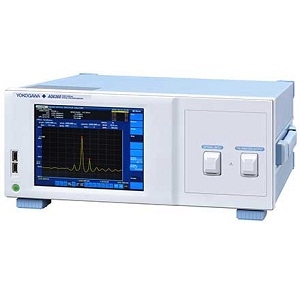
Equipment included a 980 nm laser diode, erbium-doped fiber, wavelength division multiplexer, optical isolator, optical spectrum analyzer, digital oscilloscope, high-speed photodetector, optical power meter, and radio frequency spectrum analyzer.
4:Experimental Procedures and Operational Workflow:
The Alq3 PVA film was prepared and inserted into the EDFL cavity. The laser's output spectrum, pulses train, and RF spectrum were characterized.
5:Data Analysis Methods:
The performance of the Q-switched laser was analyzed in terms of repetition rate, pulse width, output power, and pulse energy as functions of pump power.
独家科研数据包���,助您复现前沿成果����,加速创新突破
获取完整内容