研究目的
Investigating the optimal overlapping ratio and scanning strategy in laser cladding to achieve near-net shaping of parts with irregular geometric cross-sections.
研究成果
The optimal overlapping ratio for minimal surface flatness is about 20%. Changing the scanning sequence from left-to-right to center-to-sides reduces negative effects of accumulated heat, improving cladding efficiency. Precise control of layer width and height is essential for near-net shaping of triangular stacking.
研究不足
The study is limited to specific materials (high-speed steel powder and 1045 steel substrates) and may not generalize to other materials. The effects of other critical variables like laser power and scanning speed are not fully explored.
1:Experimental Design and Method Selection:
The study focuses on optimizing overlapping ratio and scanning strategy in laser cladding to achieve near-net shaping. Theoretical models and experimental methods are used to evaluate surface flatness and metallographic aspects.
2:Sample Selection and Data Sources:
High-speed steel powder (W6Mo5Cr4V2/Fe) and 1045 steel substrates are used. Data is collected through optical microscopy and SEM.
3:List of Experimental Equipment and Materials:
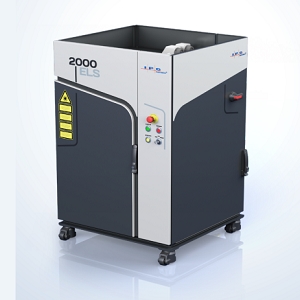
Includes an industrial robot arm (M-710iC/50, FANUC), cladding head (FDH0273, Lasermech), laser generator (YLS-3000, IPG), and water cooling device (TFLW-4000WDR-01-3385, Sanhe Tongfei).
4:Experimental Procedures and Operational Workflow:
Substrates are cleaned, powders are heated, and cladding is performed with varying overlapping ratios and scanning strategies. Post-cladding, specimens are sectioned, ground, and polished for observation.
5:Data Analysis Methods:
Surface flatness is evaluated using optical microscopy and SEM. Statistical techniques are applied to analyze the effects of overlapping ratio and scanning strategy on surface quality.
独家科研数据包�����,助您复现前沿成果�����,加速创新突破
获取完整内容