研究目的
Investigating the performance and applications of Brillouin lasers in diamond for high-power, narrow-linewidth output and mm-wave beat notes.
研究成果
The demonstration of a ring-cavity Brillouin laser in diamond operating without the need of acoustic or optical guidance shows promising results for high-power, narrow-linewidth output and mm-wave beat notes. The combination of high gain coefficient, moderate Brillouin linewidth, and high Brillouin frequency makes diamond an interesting material for extending Brillouin laser capability.
研究不足
The study is limited to the use of diamond as the Brillouin medium and does not explore other materials. The experimental setup requires precise alignment and stabilization of the cavity length.
1:Experimental Design and Method Selection:
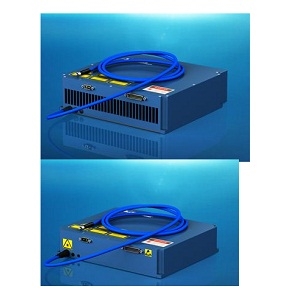
A ring cavity was adopted to allow the counterpropagation of the pump and the Stokes fields, avoiding Kerr four-wave-mixing and cascaded SBS. The pump laser was a 532 nm linearly polarized single-frequency fiber laser. A Brewster-cut single crystal CVD diamond was placed in a 50 cm-long ring-cavity.
2:Sample Selection and Data Sources:
A 5 mm diamond was used. The pump polarization angle and the Brewster facet were configured for polarization aligned to the diamond ?111? axis.
3:List of Experimental Equipment and Materials:
A 532 nm linearly polarized single-frequency fiber laser (IPG Photonics, GLR-100), a Brewster-cut single crystal CVD diamond (Element Six Ltd.), and a ring-cavity setup with mirrors and a piezoelectric translator (PZT) for cavity scanning and locking.
4:Experimental Procedures and Operational Workflow:
The pump was mode-matched into the cavity fundamental mode using a telescope. The cavity length was set manually first and then automatically stabilized using the H?nsch–Couillaud locking scheme.
5:Data Analysis Methods:
The Brillouin gain coefficient and linewidth were determined using the laser threshold and a novel frequency scanning method.
独家科研数据包�����,助您复现前沿成果,加速创新突破
获取完整内容