研究目的
To discover a new type of photovoltaic effect that generates alternating current (AC) under nonequilibrium conditions when light periodically shines at the junction/interface of materials, and to explore its potential applications in photodetection and power generation.
研究成果
The study discovered a new photovoltaic effect that generates AC under nonequilibrium conditions, offering potential applications in high-sensitivity photodetection and enhanced power generation. The effect is attributed to shifts in quasi-Fermi levels and operates on a capacitive conduction model.
研究不足
The study is limited by the need for high sampling rates to capture AC signals accurately and the requirement for specific junction/interface conditions to observe the effect. The mechanism's universality across different materials and interfaces needs further exploration.
1:Experimental Design and Method Selection:
The study involved fabricating devices based on p-Si/n-TiO2 nanofilm junctions and other types of junctions (Schottky contact, Ohmic contact, MIS, and PIN) to observe the AC photovoltaic effect under periodic illumination.
2:Sample Selection and Data Sources:
p-Type Si wafers and TiO2 nanofilms were used as primary materials. Data were collected under various light intensities, frequencies, and illumination areas.
3:List of Experimental Equipment and Materials:
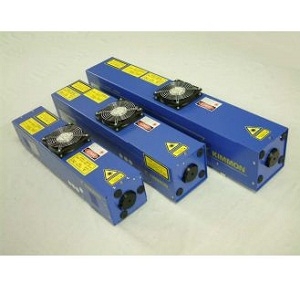
Equipment included a He-Cd laser, optical chopper, current preamplifier (SR570), voltage preamplifier (SR560), and thermopile power meter. Materials included p-Si wafers, TiO2, Al, ITO, and ZnO nanowires.
4:Experimental Procedures and Operational Workflow:
Devices were fabricated using atomic layer deposition (ALD) and other deposition techniques. Measurements were taken under flashing light conditions with varying frequencies and intensities.
5:Data Analysis Methods:
Data were analyzed to determine the relationship between light intensity, frequency, and the generated AC, using capacitive conduction models and quasi-Fermi level shifts.
独家科研数据包�,助您复现前沿成果,加速创新突破
获取完整内容