研究目的
Investigating the effects of transient high energy thermal loads on molybdenum (Mo) as a plasma facing material alternative to tungsten (W) for the ITER divertor armours.
研究成果
The higher erosion of Mo indicates that W remains the best solution for manufacturing the armours of the ITER divertor. The study concludes that although Mo has some advantages over W, such as lower ductile to brittle transition temperature and better resistance to thermal shocks, the significantly higher volume of material ablated from the surface by a single laser pulse makes W the preferred choice.
研究不足
The study focuses on the effects of a single laser pulse on Mo, and the results are compared to previous experiments on W. The most critical aspect, the large volume ablated from the surface by the single laser pulse, seems difficult to resolve due to the intrinsic properties of the material.
1:Experimental Design and Method Selection:
The study simulated transient thermal loads of high energy occurring in a tokamak during the service life through a single laser pulse delivered by a Nd:YAG/Glass laser. The effects were examined through scanning electron microscopy (SEM) observations.
2:Sample Selection and Data Sources:
Mo samples with a purity of 99.9 wt.% were supplied by PLANSEE in the form of plates, which were cut to obtain samples with dimensions of 25 mm × 20 mm.
3:9 wt.% were supplied by PLANSEE in the form of plates, which were cut to obtain samples with dimensions of 25 mm × 20 mm.
List of Experimental Equipment and Materials:
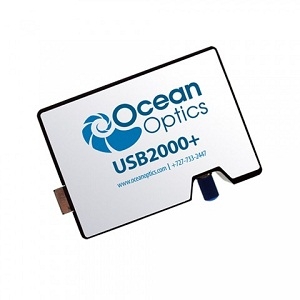
3. List of Experimental Equipment and Materials: Nd:YAG/Glass laser system (Tor Vergata Laser-Plasma Source), SEM (Hitachi SU70), 3D surface analyzer (TalySurf CLI 2000), spectrometer USB 2000 model.
4:Experimental Procedures and Operational Workflow:
The plate surface of the Mo samples was irradiated by a single laser pulse in a vacuum chamber. The effects of the laser pulse on the sample surface were investigated through 3D surface analysis and SEM observations.
5:Data Analysis Methods:
The morphology of the area affected by the laser pulse was recorded through a 3D surface analyzer, and level profiles of the crater were measured along different directions.
独家科研数据包,助您复现前沿成果����,加速创新突破
获取完整内容