研究目的
Investigating the temporal and spatial evolution of laser-induced breakdown spectroscopy (LIBS) on hydrogen retention in tantalum for fuel retention measurement on plasma-facing components (PFCs) in magnetic confinement nuclear fusion devices.
研究成果
The study successfully demonstrated the temporal and spatial evolution of LIBS plasma for hydrogen retention measurement on tantalum. The results improve the understanding of the dynamics evolution of LIBS plasma and can help optimize the current collection system of the in situ LIBS in fusion devices. Future work will include measuring the electron density of the Ta plasma to further understand its dynamics.
研究不足
The study is limited by the technical constraints of the LIBS system under vacuum conditions and the spatial resolution achievable with the current setup. The dynamic expansion of the plasma and the difference in mass between hydrogen and tantalum atoms also present challenges for quantitative analysis.
1:Experimental Design and Method Selection:
An upgraded co-axis LIBS system based on the linear fibers bundle collection system was developed to measure the hydrogen retention on tantalum under vacuum conditions. The spatial resolution measurement on different positions of the LIBS plasma was achieved simultaneously with various delay times.
2:Sample Selection and Data Sources:
Pure tantalum samples were used, mounted on a two-dimension XY piezo stage inside a vacuum chamber.
3:List of Experimental Equipment and Materials:
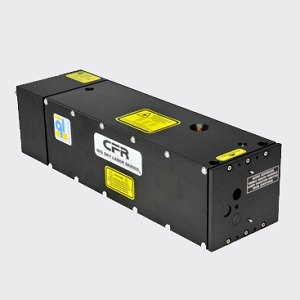
A nanosecond pulsed Q-switched Nd:YAG laser (CFR200, Quantel), a high-resolution spectrometer (Shamrock 750, Andor) with a gated ICCD camera (iStar 340, Andor), and a digital delay/pulse generator (DG645, Stanford) were used.
4:Experimental Procedures and Operational Workflow:
The laser was focused onto the surface of the sample to produce the LIBS plasma. The emission light was collected by a lens and reflected by a parabolic mirror to a fiber bundle, which was coupled to the spectrometer.
5:Data Analysis Methods:
The temporal and spatial dynamics of the H intensity in the LIBS plasma were analyzed, and the electron excited temperature was determined by the Boltzmann method.
独家科研数据包��,助您复现前沿成果����,加速创新突破
获取完整内容