研究目的
Investigating the dual coupled effects of low concentration gold nanorods on energy transfer and luminescence enhancement in Eu/Tb co-doped films.
研究成果
The study demonstrated that gold nanorods can enhance the energy transfer from Tb to Eu and the luminescence of Eu under specific excitation wavelengths. The dual effects of LSPR on energy transfer and emission enhancement were observed, providing deeper insights into the interactions between luminescent particles and luminescent materials.
研究不足
The study focuses on low concentration gold nanorods and their effects on Eu/Tb co-doped films. The complexity of the photoluminescence process and the challenges of substrate fabrication may limit the full realization of metal enhanced luminescence potential.
1:Experimental Design and Method Selection:
The study involved the preparation of Eu/Tb co-doped films with low concentration gold nanorods using the solution process. The luminescence properties were investigated under different excitation wavelengths.
2:Sample Selection and Data Sources:
Tb(TMHD)3 and Eu(dbm)3phen were used as the lanthanide compounds, and gold nanorods were synthesized and purified for the study.
3:List of Experimental Equipment and Materials:
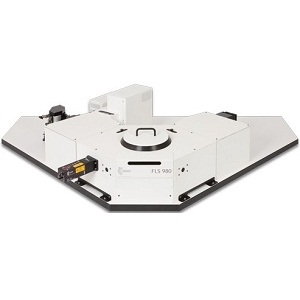
Equipment included a ZISS sigma 300 electron microscope for SEM images, a HTACHI U-3310 spectrometer for UV–vis–NIR absorption spectra, and an Edinburgh FLS920 spectrophotometer system for photoluminescence spectra and luminescence decay curves.
4:Experimental Procedures and Operational Workflow:
The nanorods were drop-casted onto pre-treated silicon wafers, and the Eu/Tb co-doped PMMA solution was spin-coated onto the nanorods covered wafer.
5:Data Analysis Methods:
The luminescence intensity and decay times were analyzed to understand the energy transfer and emission enhancement mechanisms.
独家科研数据包,助您复现前沿成果,加速创新突破
获取完整内容