研究目的
The primary objective of this work was to understand the influences of travel speeds and laser beam offsets on the weld shapes, the IMC layers and ultimate tensile strength (UTS) of Al/steel butt joints.
研究成果
The study successfully achieved butt joints of 6.0 mm thick 5083 Al alloys to Q235 steel plates using autogenous laser keyhole welding. The results show that travel speeds and laser beam offsets significantly affect the weld shape, IMC layer thickness, and UTS of the joints. The IMC layers consist of Fe2Al5 and Fe4Al13 phases, with the Fe2Al5 layer being the most brittle region. An intergranular fracture at the Fe2Al5 layers leads to a relatively high UTS of the joints.
研究不足
The study is limited to the specific materials (5083 Al alloy and Q235 steel) and thickness (6 mm) used. The findings may not be directly applicable to other materials or thicknesses. Additionally, the study focuses on autogenous laser keyhole welding, and the results may not extend to other welding processes.
1:Experimental Design and Method Selection:
The study used autogenous laser keyhole welding to join 6 mm thick steel to Al alloy plates in a butt configuration. The process parameters of travel speeds and laser beam offsets were varied to study their influence on the weld shapes, IMC layers, and UTS of Al/steel butt joints.
2:Sample Selection and Data Sources:
The materials studied were 6 mm thick 5083 alloy and Q235 low carbon steel plates arranged in a butt configuration. Before welding, the surfaces were cleaned and prepared to remove oxides and grease.
3:List of Experimental Equipment and Materials:
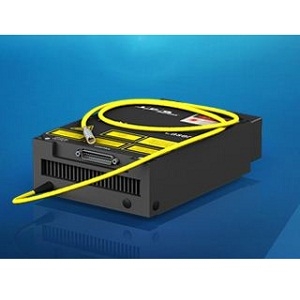
A 6 kW YLR-6000 fiber laser was used for welding. The laser beam was transmitted through a processing fiber, collimated by a lens, and focused on the materials. Ultrahigh purity argon gas was used as the shielding gas.
4:Experimental Procedures and Operational Workflow:
The focused laser beam was directed onto the steel plate to generate a keyhole, and the solidification of the welding pool formed a weld penetration. The process parameters of laser beam offsets and travel speeds were varied under constant conditions of laser power and defocused distance.
5:Data Analysis Methods:
The weld appearance and cross-sections were examined using an optical microscope. Vickers microhardness was measured, and uniaxial transverse tensile tests were carried out. The IMC layers at the interface were analyzed using SEM with EDS and EBSD techniques.
独家科研数据包,助您复现前沿成果��,加速创新突破
获取完整内容