研究目的
To compare the effect of glass formers on the calcium aluminate glasses, and to investigate the relationship between glass structure and luminescence properties.
研究成果
The effect of B2O3 on the luminescence properties of Nd3+ ions is significantly greater than that of SiO2 and Ga2O3 due to changes in the glass structure and the coordination environment of Nd3+ ions. The addition of B2O3 leads to a planar structure and increases the fraction of B atoms in the Nd3+ coordination sphere, enhancing luminescence properties. In contrast, SiO2 and Ga2O3 maintain a three-dimensional tetrahedral network with minimal changes to the Nd3+ coordination environment.
研究不足
The study focuses on the effect of B2O3, SiO2, and Ga2O3 on the luminescence properties of Nd3+ ions in calcium aluminate glasses. The comparison is limited to these glass formers and does not explore other potential additives or conditions.
1:Experimental Design and Method Selection:
High temperature melting method was used to prepare Nd3+-doped CaO-Al2O3-(B2O3, SiO2, or Ga2O3) glasses. The luminescence properties, glass structure, and coordination environment of Nd3+ ions were investigated using nuclear magnetic resonance, Raman and electron paramagnetic resonance spectroscopy.
2:Sample Selection and Data Sources:
Stoichiometric amounts of B2O3, SiO2, Ga2O3, Al2O3, CaCO3, and Nd2O3 were mixed and melted in platinum crucibles.
3:List of Experimental Equipment and Materials:
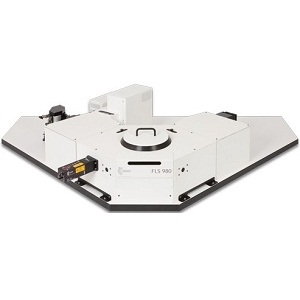
PerkinElmer Lambda 950 UV/VIS/NIR spectrophotometer, Edinburgh Instrument FLS920, Renishaw inVia Raman microscope, Bruker Avance III HD 500 M spectrometer, E-580 BRUKER ELEXSYS X-band EPR spectrometer.
4:Experimental Procedures and Operational Workflow:
The mixtures were melted at approximately 1400–1600 °C, annealed, and then characterized.
5:Data Analysis Methods:
Judd-Ofelt theory was used to calculate the parameters from absorption spectra. NMR and EPR spectra were analyzed to understand the glass structure and coordination environment of Nd3+ ions.
独家科研数据包��,助您复现前沿成果�����,加速创新突破
获取完整内容