研究目的
To study the effect of ligand shell architecture on the performance of quantum rod enhancement films (QREFs) for liquid crystal display (LCD) backlight display application, focusing on achieving optimal photoalignment of semiconductor quantum rods (QRs) in the liquid crystal monomer (LCM) matrix without compromising optical quality at high QR concentrations.
研究成果
The study concluded that promesogenic dendritic ligands in combination with relatively short alkylphosphonic acids provide the highest optical quality for QREFs, without QR aggregation, even at higher concentrations of QRs in LCM. This ligand combination is perfectly suitable for application in liquid crystal displays, offering high brightness and good alignment quality.
研究不足
The study found that the compatibility between the ligand shell on the QRs and the LCM is crucial for avoiding a drop in optical quality at high QR concentrations. However, the method's effectiveness may vary with different types of QRs and LCMs, and the process may require optimization for specific applications.
1:Experimental Design and Method Selection:
The study involved designing different ligand shells on rod-in-rod CdSe/CdS QRs and studying their compatibility with LCM molecules. The photoalignment process was used to fabricate uniformly aligned QREFs.
2:Sample Selection and Data Sources:
QRs with four different ligand combinations were tested. The mass concentration of luminescent QRs within the organic host was used for comparison.
3:List of Experimental Equipment and Materials:
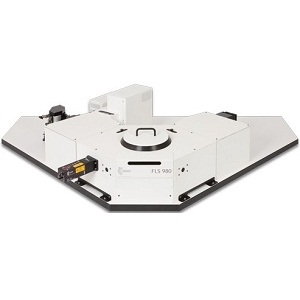
Equipment included a linearly polarized blue laser, a motor controllable rotating linearly polarizer, a spectrometer, a fluorescence spectrophotometer, a UV-vis spectrophotometer, and a transmission electron microscope.
4:Experimental Procedures and Operational Workflow:
The fabrication process of unidirectionally aligned QREFs involved spin coating and irradiation through linearly polarized light, followed by photopolymerization.
5:Data Analysis Methods:
The polarization ratio of the fabricated QREFs was measured using a setup containing a linearly polarized blue laser, a rotating polarizer, and a spectrometer. Fluorescence anisotropy measurements were done by photoselection method.
独家科研数据包���,助您复现前沿成果,加速创新突破
获取完整内容