研究目的
Investigating the energy transfer and neutral to warm white light generation in Dy3+-Sm3+ co-doped bismuth phosphate glasses for lighting applications.
研究成果
The study successfully demonstrated the energy transfer from Dy3+ to Sm3+ ions in bismuth phosphate glasses, leading to a color hue from neutral to warm white light. The CIE, CCT, and CP values suggest that these glasses could be useful for lighting applications, particularly for warm white light sources.
研究不足
The study is limited to the specific composition of bismuth phosphate glasses co-doped with Dy3+ and Sm3+ ions. The energy transfer efficiency and luminescent properties may vary with different host materials or dopant concentrations.
1:Experimental Design and Method Selection:
The study involved preparing a series of bismuth phosphate glasses co-doped with Dy3+ and Sm3+ ions using the melt quenching technique. The glasses were characterized through optical absorption, photoluminescence, and decay measurements to investigate the energy transfer mechanism and luminescent properties.
2:Sample Selection and Data Sources:
The samples were prepared with varying concentrations of Sm3+ ions (0.1, 0.3, 0.5, 1.0, 1.5, and 2.0 mol%) while keeping the Dy3+ concentration constant at 0.5 mol%.
3:1, 3, 5, 0, 5, and 0 mol%) while keeping the Dy3+ concentration constant at 5 mol%.
List of Experimental Equipment and Materials:
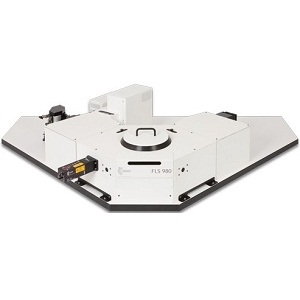
3. List of Experimental Equipment and Materials: The raw materials included NH4H2PO4, Bi2O3, Li2CO3, Na2CO3, Dy2O3, and Sm2O3. The density was measured using Archimede’s principle, and refractive index measurements were performed using an Abbe refractometer. Optical absorption measurements were done using a JASCO-770 spectrophotometer, and excitation, emission, and decay measurements were carried out using an Edinburgh FLS-980 fluorescence spectrometer.
4:The density was measured using Archimede’s principle, and refractive index measurements were performed using an Abbe refractometer. Optical absorption measurements were done using a JASCO-770 spectrophotometer, and excitation, emission, and decay measurements were carried out using an Edinburgh FLS-980 fluorescence spectrometer.
Experimental Procedures and Operational Workflow:
4. Experimental Procedures and Operational Workflow: The glasses were prepared by the melt quenching technique, and their physical properties were measured. The luminescence properties were studied under selected excitation wavelengths to examine the energy transfer mechanism.
5:Data Analysis Methods:
The CIE chromaticity coordinates, correlated color temperature (CCT), and color purity (CP) were determined from the emission data. The energy transfer efficiency was calculated using decay lifetimes.
独家科研数据包��,助您复现前沿成果���,加速创新突破
获取完整内容