研究目的
Investigating the transverse mode structure of the down-converted beams generated by a type-II optical parametric oscillator (OPO) driven by a structured pump and the selection rules imposed by the spatial overlap between the transverse modes of the three fields involved in the nonlinear interaction.
研究成果
The study provides a detailed analysis of the transverse mode dynamics in a type-II optical parametric oscillator driven by a structured pump beam. It identifies selection rules for nonvanishing intermode coupling and discusses the influence of transverse coupling strength, cavity anisotropies, and mode detuning on the oscillation threshold for different transverse mode configurations. The findings have implications for radial mode generation and quantum correlations in multimode spontaneous parametric down conversion.
研究不足
The study is limited by the damage threshold of the SLM, which restricts the laser's output power to 100 mW, resulting in a maximum pump power of approximately 30 mW. This limits the transverse modes that can be generated and studied.
1:Experimental Design and Method Selection:
The study involves a type-II optical parametric oscillator (OPO) driven by a structured pump. The analysis focuses on the spatial overlap between the transverse modes of the three fields involved in the nonlinear interaction.
2:Sample Selection and Data Sources:
The experiment uses a 532-nm TEM00 beam from the second harmonic of a Nd:YAG laser, transformed into different paraxial higher-order modes by a spatial light modulator (SLM).
3:List of Experimental Equipment and Materials:
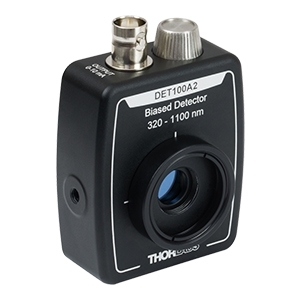
The setup includes a Nd:YAG laser, SLM (Hamamatsu, model X10468-01), concave mirrors, a KTP (KTiOPO4) crystal, dichroic mirror, nonpolarizing cube, detectors (Thorlabs, DET100A), and a CCD camera.
4:Experimental Procedures and Operational Workflow:
The laser beam is collimated and sent to the SLM, which transforms it into different paraxial higher-order modes. The OPO consists of two concave mirrors and a KTP crystal. The outcoming beams are analyzed for their transverse mode structure.
5:Data Analysis Methods:
The analysis involves calculating the spatial overlap between the transverse modes and determining the oscillation thresholds for different mode configurations.
独家科研数据包�����,助您复现前沿成果���,加速创新突破
获取完整内容