研究目的
Investigating the relationship between FRET enhancement and the product of the radiative fluorescence lifetime of the donor and the diffusion coefficient in polypeptide chains.
研究成果
The study confirmed that the FRET diffusion enhancement depends symmetrically on the diffusion coefficient and the radiative donor lifetime. This relationship underscores the importance of considering the radiative lifetime, not just the measured donor fluorescence lifetime, in FRET studies to obtain meaningful information about peptide structure and dynamics.
研究不足
The study is limited to the specific model peptides and conditions used, and the findings may not be directly applicable to other systems or conditions.
1:Experimental Design and Method Selection:
The study employed short-distance FRET (sdFRET) with Dbo as an acceptor paired with donors like NAla and FTrp. The F?rster radii were kept close to 10 ? to enhance sensitivity to diffusional motion.
2:Sample Selection and Data Sources:
Gly-Ser repeat peptides, (GS)6, labeled with two donors of largely different radiative lifetimes, NAla and FTrp, were used. The peptides were sufficiently long to avoid steric-hindrance effects and sufficiently short to lead to sizable FRET.
3:List of Experimental Equipment and Materials:
Peptides were obtained in >95% purity. Absorption spectra were recorded on a Cary 4000 UV–Vis spectrophotometer and steady-state ?uorescence spectra on a Cary Eclipse ?uorimeter. Time-resolved ?uorescence decays were recorded on a time-correlated single-photon-counting instrument.
4:Experimental Procedures and Operational Workflow:
Peptide concentrations were adjusted to 10 μM in aerated solutions of varying ethylene glycol content, 25 ?C, pH
5:The donor quantum yields were determined by comparison with N-acetyl-tryptophanamid. Data Analysis Methods:
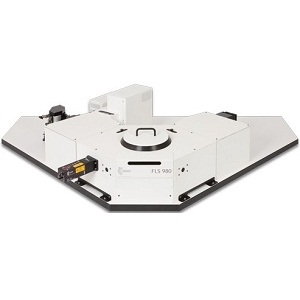
The fluorescence lifetime decay traces were analyzed using the FLS920 instrument software and the software ProFit.
独家科研数据包��,助您复现前沿成果����,加速创新突破
获取完整内容