研究目的
To investigate the novel emission bands, including visible quantum cutting behavior and strong zero phonon lines, in Na2TiF6:Mn4+ phosphors synthesized by the cation exchange method, and to evaluate their potential as red-emitting phosphors for blue light-based white light-emitting diodes (WLEDs).
研究成果
The Na2TiF6:Mn4+ phosphors synthesized by cation exchange exhibit strong zero phonon lines and visible quantum cutting behavior, with PL intensity at 620 nm being 1.61 times higher than PLE intensity at 476 nm. This is attributed to energy transfer between Na2[MnF6] and K2[MnF6] centers and concentration differences. The optimal sample (x=0.08) shows high color purity (105.4%) and is suitable for blue light-based WLEDs. Future studies could focus on enhancing homogeneity and exploring other fluoride hosts.
研究不足
The distributions of Mn4+ in samples are inhomogeneous due to the cation exchange method, which may affect reproducibility. The study is limited to specific synthesis conditions and does not explore other hosts or dopants extensively. Potential optimizations include improving homogeneity and scaling up for industrial applications.
1:Experimental Design and Method Selection:
The study employed the cation exchange method to synthesize Na2TiF6:xMn4+ phosphors at room temperature, aiming to induce strong zero phonon lines and visible quantum cutting behavior. Theoretical models such as crystal field theory and energy transfer mechanisms were used to explain the phenomena.
2:Sample Selection and Data Sources:
Samples with different molar ratios of Mn4+ (x = 0.05 to 0.10) were prepared using reagent-grade chemicals purchased from Sinopharm Chemical Reagent Co. Ltd., China. K2MnF6 was synthesized as the Mn4+ source based on literature methods.
3:05 to 10) were prepared using reagent-grade chemicals purchased from Sinopharm Chemical Reagent Co. Ltd., China. K2MnF6 was synthesized as the Mn4+ source based on literature methods.
List of Experimental Equipment and Materials:
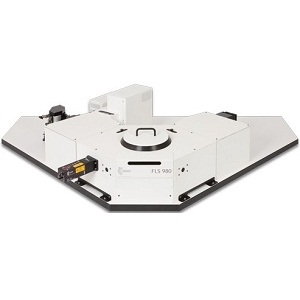
3. List of Experimental Equipment and Materials: Equipment included a Rigaku D/max 2500 V diffractometer for XRD, Hitachi S-3400 scanning electron microscopy with EDS for morphology, Shimadzu RF-5301 spectrophotometer for PL and PLE spectra, and Edinburgh FLS980 fluorescence spectrophotometer for decay curves. Materials included Na2TiF6, K2MnF6, HF solution, and acetone.
4:Experimental Procedures and Operational Workflow:
For a typical synthesis (e.g., x=0.08), K2MnF6 and HF were mixed to form a solution, Na2TiF6 was added, stirred for 2 hours, left for 12 hours, then washed with acetone and dried. Samples were characterized using XRD, SEM, EDS, PL, PLE, and decay measurements.
5:08), K2MnF6 and HF were mixed to form a solution, Na2TiF6 was added, stirred for 2 hours, left for 12 hours, then washed with acetone and dried. Samples were characterized using XRD, SEM, EDS, PL, PLE, and decay measurements.
Data Analysis Methods:
5. Data Analysis Methods: Data were analyzed using equations for color purity, crystal field strength (Dq), Racah parameters (B, C), nephelauxetic ratio (β1), critical distance (Rc), and multipolar interaction (θ), with fitting to exponential functions for decay curves.
独家科研数据包��,助您复现前沿成果����,加速创新突破
获取完整内容