研究目的
To elucidate the relationship between mechanical properties and microscopic dynamics in soft matter by coupling Fourier-space measurements to rheological tests, specifically focusing on Differential Dynamic Microscopy (DDM) under shear.
研究成果
DDM under shear allows for the investigation of microscopic dynamics in soft matter by decoupling affine and non-affine contributions. The finite depth of focus due to partial coherence is a key factor, and its calibration is essential. Far-field DDM correlators are preferred over standard ones to minimize oscillations from rigid translations. The method is versatile and can be optimized for sensitivity to non-affine motion by tuning experimental parameters.
研究不足
The dynamics must be slow enough to be captured by video microscopy (frame rates up to a few hundred Hz). The method is sensitive to the coherence of the illuminating source, requiring calibration of depth of focus. Finite size effects and noise can complicate data analysis. Discrepancies in generalized diffusion coefficients between DDM and DLS may arise due to differences in probed volumes and sensitivity to strain heterogeneities.
1:Experimental Design and Method Selection:
The study uses Differential Dynamic Microscopy (DDM) coupled with a custom-made shear cell to probe shear-induced rearrangements in soft matter. Theoretical models are developed to separate affine and non-affine contributions to the dynamics.
2:Sample Selection and Data Sources:
Samples include frosted glass slides (2D samples) and polyacrylamide (PA) gels (3D samples) with added TiO2 nanoparticles at a volume fraction of about 0.01%.
3:01%.
List of Experimental Equipment and Materials:
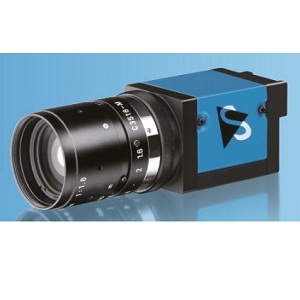
3. List of Experimental Equipment and Materials: Leica DM IRB inverted microscope, 10x objective, CCD camera (model DMK 23U274 from The Imaging Source GmbH), custom-made shear cell, motorized linear actuator (model HTA-HL by Newport), TiO2 nanoparticles.
4:Experimental Procedures and Operational Workflow:
The microscope is coupled to the shear cell. Images are taken under shear, and Fourier transforms are computed. Correlation functions (cDDM and cFF-DDM) are calculated to analyze dynamics. A calibration protocol for depth of focus Lf(q) is performed by scanning the object plane vertically.
5:Data Analysis Methods:
Spatial Fourier transforms of images are used. Correlation functions are analyzed to decouple affine and non-affine contributions. Statistical averaging over Fourier space regions and time is employed.
独家科研数据包,助您复现前沿成果�,加速创新突破
获取完整内容