研究目的
To propose and demonstrate a quantum well photoelastic comb for efficient electrostrictive coupling of light to ultra-high frequency optomechanical resonances in semiconductor hybrid resonators, enabling higher frequency operation for quantum technologies.
研究成果
The study successfully demonstrates a quantum well photoelastic comb that enhances optomechanical coupling to ultra-high frequency mechanical modes (up to 230 GHz) in semiconductor microcavities through electrostrictive forces. This approach achieves high optomechanical constants (g0 ≈ 2π × 2.2 MHz) and low threshold powers (~2 mW), enabling potential access to strong-coupling regimes. The resonant nature of the photoelastic interaction is confirmed, and the method offers a path for designing devices for quantum and high-frequency information technologies, with possibilities for further integration with other quantum systems.
研究不足
The spectral resolution and bandwidth requirements are stringent for ultra-high frequency measurements; absolute Raman cross sections are not accessible, limiting quantitative comparisons; the experiments are performed at cryogenic temperatures (80 K), which may not be practical for all applications; and the design relies on specific material properties (GaAs/AlAs) and growth techniques (MBE), which could restrict scalability or integration with other systems.
1:Experimental Design and Method Selection:
The study uses a purposely designed ultra-high resolution Raman spectroscopy set-up based on a tandem Fabry-Perot triple spectrometer to measure optomechanical coupling in semiconductor microcavities. The method involves double optical resonant (DOR) configuration for selective enhancement of Brillouin-Raman signals.
2:Sample Selection and Data Sources:
Two planar microcavity structures were grown by molecular beam epitaxy (MBE): a 'bulk' GaAs microcavity and a multiple quantum well (MQW) resonator with GaAs quantum wells separated by AlAs barriers. Samples were characterized at 80 K.
3:List of Experimental Equipment and Materials:
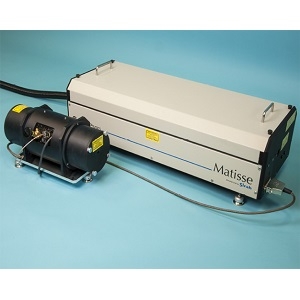
Equipment includes a tandem Fabry-Perot interferometer coupled to a T64000 Jobin-Yvon triple spectrometer, a Ti:sapphire single-mode Spectra-Physics Matisse TS ring laser, liquid-N2 cooled charge-coupled device multichannel detector, and high-quality dielectric mirrors. Materials include GaAs and AlAs layers for the microcavities.
4:Experimental Procedures and Operational Workflow:
The Raman spectroscopy was performed by angle tuning to achieve DOR configuration, with laser excitation set below the bandgap. Spectra were collected as a function of gas pressure in the FP to reconstruct Raman profiles with sub-pixel resolution.
5:Data Analysis Methods:
Data were analyzed using a photoelastic model for Raman cross section, correcting for Bose factor, and comparing experimental intensities to theoretical calculations based on spatial overlap of strain and optical fields.
独家科研数据包,助您复现前沿成果���,加速创新突破
获取完整内容