研究目的
To propose and demonstrate a simultaneous measurement system of temperature and refractive index (RI) using a micro?ber Bragg Grating (mFBG) in a Sagnac loop, addressing the problem of temperature cross-sensitivity in optical fiber RI sensors.
研究成果
The proposed sensor successfully achieves simultaneous measurement of temperature and refractive index with sensitivities of 0.033 nm/°C and -0.015 dB/°C for temperature, and 39.30 nm/RIU and 41.51 dB/RIU for RI. It demonstrates good linear responses and has a simple structure, making it suitable for applications in biological and chemical fields. Future work could focus on enhancing sensitivity and expanding the measurement range.
研究不足
The sensor's performance may be limited by the accuracy of the temperature chamber (1°C) and the linearity of responses, as indicated by R-squared values (e.g., 0.88527 for wavelength in temperature measurement). Potential optimizations could include improving sensor fabrication for higher sensitivity and reducing cross-sensitivity further.
1:Experimental Design and Method Selection:
The sensor is designed with a Sagnac loop incorporating a micro?ber Bragg Grating (mFBG) to achieve simultaneous measurement of temperature and refractive index (RI) based on different interference mechanisms. Theoretical models include Jones matrix for the coupler and fiber system, and transmission matrix for the FBG.
2:Sample Selection and Data Sources:
The sensor is tested in air, a temperature chamber (30-80°C), and RI matching liquids (1.3481 to 1.4067). Data is acquired from the output spectrum using an optical spectrum analyzer (OSA).
3:3481 to 4067). Data is acquired from the output spectrum using an optical spectrum analyzer (OSA).
List of Experimental Equipment and Materials:
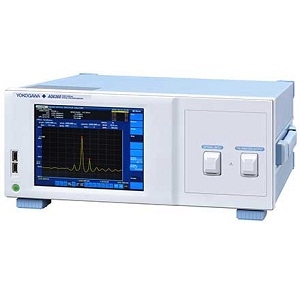
3. List of Experimental Equipment and Materials: Includes an ASE light source (NKT Photonics, Superk Compact), OSA (YOKOGAWA, AQ6370D), temperature chamber (Column Oven Lco 102), 3-dB coupler, mFBG (length 4 cm, diameter 20.7 μm), and fibers with lengths L1=23.3 cm and L2=26.6 cm.
4:7 μm), and fibers with lengths L1=3 cm and L2=6 cm.
Experimental Procedures and Operational Workflow:
4. Experimental Procedures and Operational Workflow: Light from the ASE source is launched into the sensor; output spectrum is monitored with OSA. The sensor is placed in the temperature chamber for temperature tests and in RI liquids for RI tests. Spectra are recorded and analyzed for wavelength shifts and intensity changes.
5:Data Analysis Methods:
Linear fitting is applied to the data to determine sensitivities (wavelength shift and intensity change vs. temperature and RI). R-squared values are calculated for goodness of fit.
独家科研数据包�����,助您复现前沿成果����,加速创新突破
获取完整内容