

研究目的
Investigating the photophysical properties, photochemical reactivity, and antiproliferative activity of bis-naphthols and bis-anthrols, focusing on the competition between photodehydration, symmetry breaking charge separation, and excited state proton transfer, and their biological effects.
研究成果
Bis-naphthols undergo competitive photochemical processes including SB-CS and photodehydration, with ESPT being inefficient. Photodehydration generates QMs, which enhance antiproliferative activity upon irradiation, likely through protein alkylation rather than DNA cross-linking. This provides insights for developing phototherapeutic agents.
研究不足
Low solubility of bis-anthrols in common solvents hindered detailed spectroscopic and quantum yield measurements. The photomethanolysis for bis-anthrols was not clean, leading to complex mixtures. LFP signals for QMs were weak, limiting precise lifetime determinations. The study did not achieve DNA cross-linking as intended, and the exact mechanism of antiproliferative activity requires further investigation.
1:Experimental Design and Method Selection:
The study involved preparative irradiations in methanol, fluorescence spectroscopy, laser flash photolysis (LFP), and MTT assays to evaluate photochemical reactions and biological activity. Theoretical models for photodehydration, SB-CS, and ESPT were employed.
2:Sample Selection and Data Sources:
Bis-naphthols 4a-4e and bis-anthrols 5a and 5e were synthesized and used. Human cancer cell lines NCI-H1299, MCF-7, and SUM159 were used for antiproliferative assays. Data from UV-Vis, fluorescence, LFP, and HPLC/UPLC-MS analyses were collected.
3:List of Experimental Equipment and Materials:
Quartz vessels, Rayonet photochemical reactor with 300 nm lamps, Luzchem reactor with 350 nm lamps, HPLC/UPLC systems, fluorescence spectrophotometers, LFP setup, MALDI-TOF/TOF mass spectrometer, and standard chemicals like CH3OH, CH3CN, buffers.
4:Experimental Procedures and Operational Workflow:
Synthesis of compounds via Grignard reactions, preparative irradiations in CH3OH-H2O mixtures, quantum yield measurements using KI/KIO3 actinometer, fluorescence and absorption spectroscopy in various solvents, LFP for transient detection, MTT assays on cell lines with and without irradiation, and protein alkylation studies with BSA and HSA.
5:Data Analysis Methods:
Data were analyzed using HPLC/UPLC-MS for product identification, Specfit program for fluorescence titration, FluoFit for SPC decays, and standard statistical methods for quantum yields and biological assays.
独家科研数据包,助您复现前沿成果,加速创新突破
获取完整内容-
Fluorometer
Agilent Cary Eclipse
Agilent
Used for fluorescence spectroscopy measurements.
 立即获取同款设备
 -
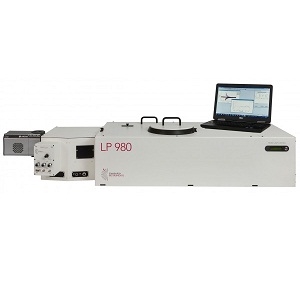
Laser Flash Photolysis system
LP980
Edinburgh Instruments
Used for detecting transient species like radical ions and QMs.
 立即获取同款设备
-
MALDI-TOF/TOF mass spectrometer
Applied Biosystems Voyager DE STR
Applied Biosystems
Used for mass spectrometry analysis of proteins after alkylation.
暂无现货
预约到货通知
-
Single Photon Counting setup
PLS 267 nm pulsed LED
PicoQuant
Used for measuring singlet excited state lifetimes.
暂无现货
预约到货通知
-
Rayonet photochemical reactor
300 nm lamps, 8W
Rayonet
Used for preparative irradiations of compounds in methanol-water mixtures.
暂无现货
预约到货通知
-
Luzchem reactor
350 nm lamps, 8W
Luzchem
Used for irradiation in protein alkylation studies and cell assays.
暂无现货
预约到货通知
-
HPLC system
Waters Acquity UPLC with SQD mass spectrometer
Waters
Used for analytical and preparative separations and mass spectrometry.
暂无现货
预约到货通知
-
登录查看剩余5件设备及参数对照表
查看全部



