

研究目的
To investigate the effects of different TiB2 particle sizes and laser powers on the microstructure, formation mechanism, hardness, and wear resistance of laser-cladded titanium matrix composite coatings, with a focus on achieving high aspect ratio TiB fiber bundles.
研究成果
High aspect ratio TiB fiber bundles can be formed using 0.5 μm TiB2 powder at high laser powers (2.5-3.0 kW), leading to improved hardness and wear resistance compared to randomly oriented fibers. The formation mechanism involves agglomeration and in-situ reaction. Future work could optimize parameters for broader applications.
研究不足
The study is limited to specific TiB2 particle sizes and laser power ranges; agglomeration of fine particles may affect results, and the rapid solidification process could lead to micro-pores. Applications may be constrained by the need for precise control of laser parameters.
1:Experimental Design and Method Selection:
Laser cladding technique was used to fabricate coatings on a titanium alloy substrate with TiB2 powder of varying particle sizes (0.5 μm, 5 μm, 50 μm). The study involved varying laser powers to observe microstructure evolution, hardness, and wear resistance.
2:5 μm, 5 μm, 50 μm). The study involved varying laser powers to observe microstructure evolution, hardness, and wear resistance. Sample Selection and Data Sources:
2. Sample Selection and Data Sources: TC4 titanium alloy substrates (Φ30 mm × 15 mm) were used. TiB2 powders of specified sizes were pre-coated with phenolic resin, dried, and then laser-cladded.
3:List of Experimental Equipment and Materials:
Equipment included an YLS-6000 IPG fiber laser, SEM (JSM-6490LA), XRD (D/max 2550 VL/PC), EPMA (JXA-800), TEM (JEOL-2100), micro hardness tester (HXD-1000B), fretting wear tester (FTM200), and profilometer (Mahr-M1). Materials included TiB2 powders, phenolic resin, acetone, alcohol, and etchant (HNO3:HF:H2O = 3:2:95).
4:1). Materials included TiB2 powders, phenolic resin, acetone, alcohol, and etchant (HNO
4. Experimental Procedures and Operational Workflow: Substrates were prepared by grinding and cleaning. TiB2 powder was pre-coated, dried, and laser-cladded under argon gas. Post-cladding, specimens were cut, ground, polished, etched, and analyzed using SEM, XRD, EPMA, TEM for microstructure, and tested for hardness and wear resistance.
5:5). Experimental Procedures and Operational Workflow:
5. Data Analysis Methods: Microstructure was analyzed via SEM, XRD, EPMA, and TEM. Hardness was measured with a micro hardness tester, and wear volume was calculated from profilometer data. Statistical methods included multiple measurements for reliability.
独家科研数据包,助您复现前沿成果,加速创新突破
获取完整内容-
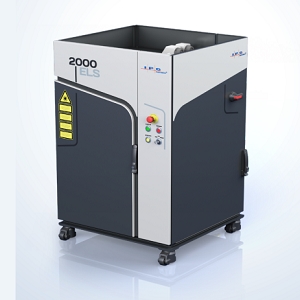
fiber laser
YLS-6000
IPG
Used for laser cladding to fabricate coatings on the substrate.
 立即获取同款设备
 -
scanning electron microscope
JSM-6490LA
JEOL
Used to examine the microstructures of the cross-sections of the cladding layers.
暂无现货
预约到货通知
-
X-ray diffractometer
D/max 2550 VL/PC
Rigaku
Used to identify the phases of the microstructures in the cladding layers.
暂无现货
预约到货通知
-
electron probe microprobe analyzer
JXA-800
JEOL
Used to determine the chemical composition of phases in the specimens.
暂无现货
预约到货通知
-
transmission electron microscope
JEOL-2100
JEOL
Used to analyze the fine structure of the specimens.
暂无现货
预约到货通知
-
micro hardness tester
HXD-1000B
Used to measure the micro-hardness of the cladding layers.
暂无现货
预约到货通知
-
fretting wear tester
FTM200
Used to perform fretting wear tests on the cladding layers.
暂无现货
预约到货通知
-
profilometer
Mahr-M1
Mahr
Used to measure the wear losses of the cladding layers and substrate.
暂无现货
预约到货通知
-
登录查看剩余6件设备及参数对照表
查看全部



