研究目的
Investigating the nonlinear optical properties of colloidal CdSe quantum dots conjugated with proteins for potential applications in nonlinear bioimaging.
研究成果
The research demonstrates that covering the surface of QDs with peptide chains can achieve efficient two-photon excited imaging agents dispersible in aqueous solution, with potential applications in nonlinear bioimaging. The study highlights the importance of further development to enhance the brightness of two-photon induced emission.
研究不足
The study acknowledges the need for further research to improve the brightness of the two-photon induced emission for more efficient bioimaging applications.
1:Experimental Design and Method Selection
The study employed the two-photon excited emission (TPEE) technique using a tunable femtosecond laser system to investigate the nonlinear optical properties of CdSe quantum dots conjugated with proteins.
2:Sample Selection and Data Sources
Hydrophobic CdSe quantum dots were synthesized and then functionalized with proteins to create hydrophilic CdSe:PUF QDs assemblies. The optical properties of these QDs were then analyzed.
3:List of Experimental Equipment and Materials
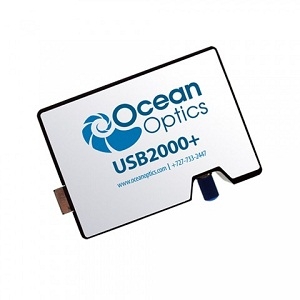
Tunable mode-locked Ti:sapphire laser (Chameleon, Coherent Inc.), JASCO V670 spectrometer, FS5 Spectrofluorometer (Edinburgh Instruments, UK), Ocean Optics USB2000 fiber-coupled spectrometer.
4:Experimental Procedures and Operational Workflow
The synthesis of trioctylphosphine oxide-capped CdSe hydrophobic QDs, their functionalization with proteins, and subsequent optical characterization using one-photon and two-photon spectroscopy techniques.
5:Data Analysis Methods
The two-photon absorption cross-section was determined using the TPEE technique, with Rhodamine 610 as the reference dye. Quantum yields were measured using the comparative method.
独家科研数据包�,助您复现前沿成果,加速创新突破
获取完整内容