研究目的
To propose and verify a new optical angle sensor that employs a mode-locked laser as the light source and utilizes chromatic dispersion of a collimator objective to detect the angular displacement of a target.
研究成果
The proposed optical angle sensor using a mode-locked laser and chromatic dispersion of a collimator objective was demonstrated to be feasible for measuring small angular displacements. A resolution of 0.23 arc-second was estimated, with potential for improvement through further optimization.
研究不足
The initial incident angle θ0 was treated as a known parameter, and experiments were limited by the small stroke of the PZT tilt stage. The resolution obtained was lower than expected, indicating a need for further optimization of the optical setup.
1:Experimental Design and Method Selection
The methodology involves using a mode-locked femtosecond laser beam and a collimator objective with chromatic dispersion to detect angular displacement. The reflected laser beam's optical modes are separated by chromatic dispersion to generate focused laser beams for measurement.
2:Sample Selection and Data Sources
A mirror reflector mounted on a piezoelectric (PZT) tilt stage system was used as the target. The optical spectrum of the laser beam coupled into a single-mode optical fiber was analyzed by an optical spectrum analyzer.
3:List of Experimental Equipment and Materials
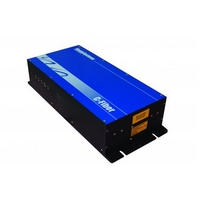
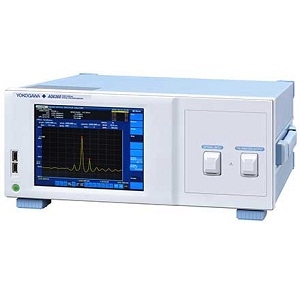
Mode-locked femtosecond laser source (C-Fiber, MenloSystems GmbH), collimating lens, PZT tilt stage (PSH2z, Piezosystemjena Inc.), single-mode optical fiber, collimator objective, optical spectrum analyzer (AQ6370C, YOKOGAWA Co.).
4:Experimental Procedures and Operational Workflow
The femtosecond laser beam was collimated and made incident to a mirror reflector. The reflected beam was focused on an edge of a single-mode optical fiber by a collimator objective. The laser beam coupled into the fiber was analyzed by an optical spectrum analyzer to acquire the optical spectrum.
5:Data Analysis Methods
The change in peak frequency in optical spectra was detected to measure angular displacement. The angular displacement giving maximum light power was determined by fitting a quadratic function to the change in normalized light power of each frequency component.
独家科研数据包���,助您复现前沿成果�,加速创新突破
获取完整内容