研究目的
Investigating the relationship between the single crystal structure of materials and the electroluminescence (EL) performance of doped OLED devices.
研究成果
The study concludes that highly twisted molecular structures, as observed in the single crystal structures of 1,6 DAP-TP and DAC-TP, can improve the EL efficiency of materials by inhibiting rotational and vibrational motions. The doped OLED devices using 1,6 DAP-TP showed higher efficiency than those using DAC-TP, and both compounds satisfied the high-density television display requirements with ultra-deep blue emission.
研究不足
The study is limited to the comparison of two specific compounds and their performance in doped OLED devices. The relationship between single crystal structure and EL performance may not be generalizable to all materials.
1:Experimental Design and Method Selection:
The study involved the synthesis and characterization of two compounds, 1,6 DAP-TP and DAC-TP, to investigate their single crystal structures and EL performance in doped OLED devices.
2:Sample Selection and Data Sources:
The compounds were synthesized and purified, and their optical and electrical properties were measured.
3:List of Experimental Equipment and Materials:
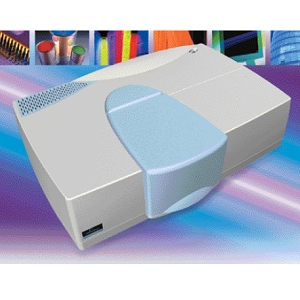
UV-Visible absorption and photoluminescence (PL) spectra were obtained using a Lambda 1050 UV/Vis/NIR spectrometer and a PerkinElmer luminescence spectrometer LS50, respectively. OLED devices were fabricated using a vacuum deposition method.
4:Experimental Procedures and Operational Workflow:
The OLED devices were fabricated with a specific configuration, and their EL performance was measured.
5:Data Analysis Methods:
The EL performance data were analyzed to compare the efficiency of the two compounds as dopants in OLED devices.
独家科研数据包�����,助您复现前沿成果�����,加速创新突破
获取完整内容