研究目的
To develop and characterize a simple optical sensor using a silicone elastomer that can measure large deformations in soft robotic devices and actuators by addressing issues related to optical power losses and external light interference.
研究成果
The ratioed dual wavelength flexible optical deformation sensor demonstrated good repeatability and low hysteresis over 500 extension cycles. Optical dyes were shown to increase sensor sensitivity. The technology shows promise for applications requiring large deformation measurements, though improvements in accuracy are needed.
研究不足
The sensor's relative error needs improvement for effective use in soft robotic actuators. The maximum extension was limited to 100% due to the motor's stroke length. Surface imperfections on the waveguide introduced errors in deformation estimation.
1:Experimental Design and Method Selection:
The sensor was designed based on the Beer-Lambert Law, utilizing a dual wavelength scheme to compensate for wavelength independent optical losses.
2:Sample Selection and Data Sources:
Silicone waveguides were prepared with and without optical dyes to investigate their effect on sensor sensitivity.
3:List of Experimental Equipment and Materials:
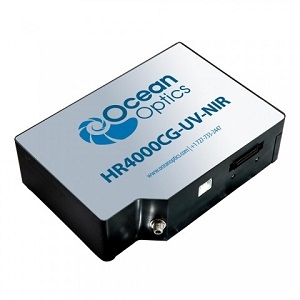
Included a RGB LED, photodiode, Ocean Optics HR4000CG-UV-NIR spectrometer, and Parker linear stage.
4:Experimental Procedures and Operational Workflow:
The waveguides were stretched in increments, and optical spectra were measured at each increment. Cyclic testing was performed to evaluate repeatability and hysteresis.
5:Data Analysis Methods:
The ratio of optical intensity of two wavelengths was used to estimate deformation, and the derivative of the Beer-Lambert Law was used to calculate sensor resolution.
独家科研数据包,助您复现前沿成果���,加速创新突破
获取完整内容