研究目的
Investigating the luminescence features of Eu3t-doped fluoro-telluroborate glasses for applications in white-light-emitting diodes (WLEDs) and red light-emitting optical devices.
研究成果
The Eu3t-doped fluoro-telluroborate glasses exhibit promising features for red light-emitting optical devices and as a red component in WLEDs, with optimal results observed for 1.0 mol% Eu3t-doped glass.
研究不足
The study is limited to Eu3t-doped fluoro-telluroborate glasses and their luminescence properties under specific conditions. The absence of 5D0 → 7F6 transition in PL spectra restricted the resolution of Ω6 values.
1:Experimental Design and Method Selection
Conventional melt-quench method was used to synthesize six fluoro-telluroborate glasses doped with different concentrations of Eu3t ions. The photoluminescence (PL) spectra were recorded under blue light (464 nm) excitation.
2:Sample Selection and Data Sources
Analar grade chemicals: PbF2, TeO2, B2O3, and Eu2O3 were used as starting materials. The glasses were melted at 980°C for 90 min and annealed at 200°C for 3 h.
3:List of Experimental Equipment and Materials
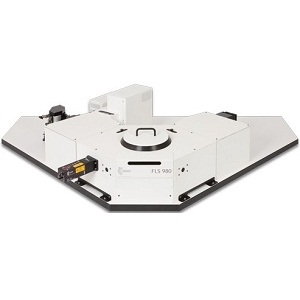
Edinburg Spectrofluorometer (FLS) – 980 equipped with a CW Xenon arc lamp (450 W power) for PL spectra and decay lifetime measurements.
4:Experimental Procedures and Operational Workflow
The glasses were synthesized, annealed, and polished to optical quality. PL spectra and decay lifetime measurements were performed at ambient temperature.
5:Data Analysis Methods
Judd-Ofelt (J-O) parameters were calculated to study the radiative features. Radiative parameters like total emission transition probability, branching ratios, stimulated emission cross-section, gain bandwidth, and optical gain were evaluated.
独家科研数据包�,助您复现前沿成果,加速创新突破
获取完整内容