研究目的
Investigating the generation of high-order cylindrical vector beams with tunable topological charge directly from a Yb:YAG microchip laser under annular beam pumping.
研究成果
High-order cylindrical vector beams with tunable topological charge up to 14 were successfully generated in an annular beam pumped Yb:YAG microchip laser. The beams exhibited high beam quality, with M2 values close to the theoretical predictions, and high optical efficiency up to 17.5%. The study demonstrated the potential of compact solid-state lasers for generating high-quality vector-vortex beams with large topological charges, which could have significant applications in optical communication, quantum information processing, and optical manipulation.
研究不足
The study is limited by the pump power intensity saturation effect and the thermal-induced birefringence in the Yb:YAG crystal, which may affect the stability and efficiency of the generated vector-vortex beams. The maximum topological charge achieved was 14, and further increases may require higher pump powers or optimization of the laser cavity design.
1:Experimental Design and Method Selection:
The study utilized an annular beam end-pumped Yb:YAG microchip laser to generate vector-vortex beams with tunable topological charges. The methodology involved manipulating the pump power-dependent population inversion distribution inside the laser crystal.
2:Sample Selection and Data Sources:
The gain medium was a ?10 mm × 1 mm Yb:YAG crystal with 10 at. % Yb3+ doping concentration. The pump source was a fiber-coupled laser-diode working at 940 nm.
3:List of Experimental Equipment and Materials:
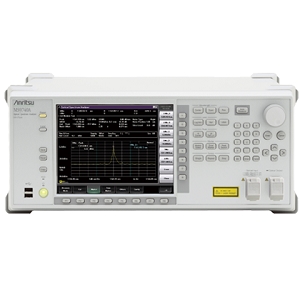
The setup included a fiber-coupled laser-diode, collimating and focus lenses, Yb:YAG crystal, output coupler, beam profile analyzer, and optical spectral analyzer.
4:Experimental Procedures and Operational Workflow:
The annular pump beam was focused onto the Yb:YAG crystal. The output transverse intensity profiles and polarization states of the generated vector-vortex beams were measured. The laser spectra were recorded to observe wavelength tunability and dual-wavelength operation.
5:Data Analysis Methods:
The beam quality factor M2 was measured to evaluate the beam quality. The polarization states were analyzed by passing the beams through a linear polarizer. The laser spectra were analyzed to determine the central wavelengths and mode structures.
独家科研数据包���,助您复现前沿成果,加速创新突破
获取完整内容