研究目的
The goal of this study was to characterize the parameter range for joining aluminum with polyethylene as a function of the rotational speed and the feed rate, and to investigate derived variables (e.g. temperature) regarding their suitability as input parameters for a closed-loop controller. As a second step, the influence of different surface pretreatment strategies, using laser radiation, was evaluated.
研究成果
The study demonstrated that the temperatures in the friction press joining process can be controlled via the process parameters 'rotational speed' and 'feed rate'. A quasi-chaotic nanostructuring of the metallic surface, produced with a pulsed laser process, resulted in high bond strengths for PE-HD to aluminum alloys. The boundary layer was identified as the critical layer that significantly determines the tensile strength. Future research will focus on the mathematical description of the joining zone temperature and the development of a force control system.
研究不足
The study focused on the joining of aluminum and polyethylene, and the results may not be directly applicable to other material combinations. The influence of the axial force on the process was not fully investigated and requires further study.
1:Experimental Design and Method Selection:
The study involved a fully-fractionally experiment to analyze the temperature distribution during the friction press joining process. The process parameters 'rotational speed' and 'feed rate' were varied to investigate their effects on the friction surface temperature and the joining zone temperature.
2:Sample Selection and Data Sources:
The aluminum wrought alloy EN AW-6082-T6 and high density polyethylene (PE-HD) were used as joining partners. Thermocouples were used to measure temperatures at various points in the composite.
3:List of Experimental Equipment and Materials:
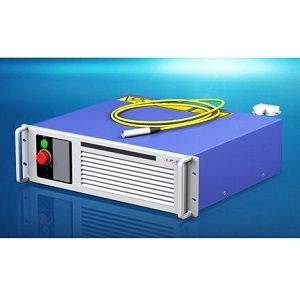
A Heller MCH250 CNC milling machine was used for the experiments. The tool was made of hardened C45 steel. Two different laser systems were used for surface pretreatment: a pulsed fiber laser system PowerlineF20 from Rofin-Sinar GmbH and a single-mode fiber laser YLR-3000-SM from IPG Photonics Corporation.
4:Experimental Procedures and Operational Workflow:
The joining process was divided into five phases: pretreatment, touch-down phase, dwelling phase, welding phase, and retreat phase. The temperatures in the joining zone and the aluminum were measured, and the tensile shear strength of the joints was evaluated.
5:Data Analysis Methods:
The temperature differences between the friction surface temperature and the joining zone temperature were analyzed. The tensile shear strength of the joints was measured using a tensile-testing machine.
独家科研数据包,助您复现前沿成果�,加速创新突破
获取完整内容