研究目的
Investigating the double raster laser scanning strategy for rapid die-less bending of 3D shapes in stainless steel sheets to achieve large deformations with one-step laser irradiation.
研究成果
The double raster scanning strategy proved effective for achieving large deformations in stainless steel sheets with one-step laser irradiation. The overlap ratio between passes significantly influences the deformation magnitude and symmetry. The study provides insights into optimizing laser forming processes for rapid prototyping and adjustment of parts.
研究不足
The study is limited to AISI 316 stainless steel sheets and specific dimensions. The effect of repetitive scanning on microstructural changes and residual stresses was not deeply explored. The process's applicability to other materials and larger dimensions requires further investigation.
1:Experimental Design and Method Selection:
The study employed a double raster scanning strategy for 3D laser forming, analyzing the effect of overlap ratios on deformation. Theoretical models and finite element simulations were used to understand the thermo-mechanical behavior.
2:Sample Selection and Data Sources:
Flat, rectangular AISI 316 stainless steel samples with dimensions of 18 × 22 × 0.5 mm were used. Samples were cleaned and coated with graphite before experiments.
3:5 mm were used. Samples were cleaned and coated with graphite before experiments.
List of Experimental Equipment and Materials:
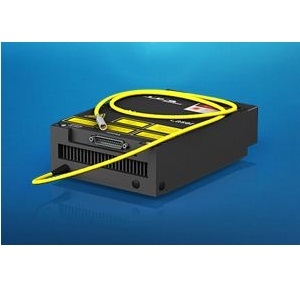
3. List of Experimental Equipment and Materials: An Ytterbium fiber laser (IPG YLR-200, IPG Photonics, Germany) with a maximum power of 200 W was used. Different beam diameters were achieved by changing the vertical position of the base in the laser system.
4:Experimental Procedures and Operational Workflow:
Samples were held on a cylindrical steel pillar during experiments. The laser forming process involved scanning lines at opposite sides of the sample sequentially to achieve symmetric bending. The overlap ratio between passes was varied to study its effect on deformation.
5:Data Analysis Methods:
The radius of curvature of 3D formed samples was measured using commercially available software, Camera MeasureTM. Finite element simulations were performed with ABAQUSTM to analyze temperature and strain distributions.
独家科研数据包����,助您复现前沿成果,加速创新突破
获取完整内容