研究目的
To demonstrate and characterize the differences in the surface topography formation having initial flat and ground surfaces for the same LP process parameters.
研究成果
LP is a complex physical-thermo-dynamic process where original surface geometry plays a critical role on the formation of the polished surface. The formation of the LPed surface topography includes a bulging effect and involves two major processes: bulk material-laser interactions and an additional effect from the non-uniform initial surface. Future research will need to continue the development of fundamental/engineering foundation for the LP technology.
研究不足
The study focuses on the effect of initial surface topography on LP process, but the contributions brought by the two processes (bulk material-laser interactions and non-uniform initial surface) are not linear. Smoothing a given material and initial surface can only be achieved when the effect of the polishing process itself on the bulk material is as minimal as possible.
1:Experimental Design and Method Selection:
The study utilized statistical modelling and analysis methodologies to separate the effects of the laser melting and solidification of both solid bulk material and initial surface topography.
2:Sample Selection and Data Sources:
Two sets of LP experiments were performed on H13 tooling steel samples with significantly different initial surface topography: ground and perfectly flat.
3:List of Experimental Equipment and Materials:
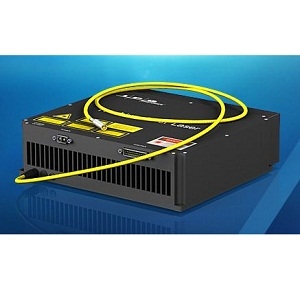
The LP system consisted of a high-precision 3-axis motion system and a 1070 nm, 500 W continuous wave laser from IPG Photonics (model YLR-500). The motion system was controlled by a CNC motion controller from Aerotech.
4:0). The motion system was controlled by a CNC motion controller from Aerotech. Experimental Procedures and Operational Workflow:
4. Experimental Procedures and Operational Workflow: The surface topography analysis methodology consisted of measurement of original surface geometry, performing LP experiments on previously measured surface, and measurement of LPed surface geometry using marks for alignment with respect to the original surface profile.
5:Data Analysis Methods:
Several comprehensive statistical functions, such as transfer and coherence functions were employed to describe a statistical digital twin of the LP process.
独家科研数据包,助您复现前沿成果�,加速创新突破
获取完整内容