研究目的
To accurately predict the weld bead geometry in fiber laser keyhole welding without expensive trial experiments, using an innovative volume heat source model based on finite element analysis (FEA).
研究成果
The proposed FEA prediction method using an innovative volume heat source model is effective for predicting weld bead geometry in fiber laser keyhole welding, achieving better agreement with experimental results than BPNN. This method has great theoretical significance and engineering value for welding process parameters pre-selection and can replace expensive trial experiments.
研究不足
The study focuses on stainless steel SUS301L-HT and may not be directly applicable to other materials without further validation. The accuracy of BPNN predicted results relies on sufficiently expensive experiments due to the non-linear and complicated relationship between process parameters and weld bead geometry.
1:Experimental Design and Method Selection:
The study uses an innovative volume heat source model combining a double ellipsoid heat source and a 3D Gaussian heat distribution model for weld bead geometry prediction through FEA.
2:Sample Selection and Data Sources:
Stainless steel SUS301L-HT is used as the base material for fiber laser keyhole welding experiments.
3:List of Experimental Equipment and Materials:
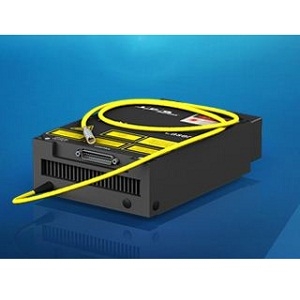
The welding system includes an IPG YLR-4000 fiber laser system, ABB IRC5 M2004 welding robot, and coaxial air blow protection device.
4:Experimental Procedures and Operational Workflow:
Experiments are conducted according to a designed Taguchi L9 orthogonal array, with laser power, welding speed, and focal position as variables.
5:Data Analysis Methods:
The predicted values from FEA and BPNN are compared with experimental results to validate the effectiveness of the proposed heat source model.
独家科研数据包,助您复现前沿成果����,加速创新突破
获取完整内容