研究目的
Investigating the generation of L-band vector solitons from a dispersion-managed Er-doped mode-locked fiber laser incorporating carbon nanotubes as the saturable absorber.
研究成果
The study successfully demonstrates the generation of polarization-locked L-band vector solitons from a dispersion-managed Er-doped fiber laser incorporating carbon nanotubes for the first time. The solitons operate at a wavelength near 1594.7 nm with a repetition rate of 12.13 MHz, indicating stable soliton operation.
研究不足
The study is limited to the generation of vector solitons in a specific setup using carbon nanotubes as the saturable absorber. The applicability and performance in other configurations or with different materials are not explored.
1:Experimental Design and Method Selection:
The experiment involves the generation of vector solitons in a dispersion-managed Er-doped fiber laser using carbon nanotubes as a saturable absorber. The setup includes a
2:8-m-long Er-doped fiber as the gain medium, pumped by a 980 nm laser through a WDM coupler. The laser cavity includes a polarization-insensitive optical isolator, an 80/20 coupler for output, and a polarization controller to optimize mode-locking conditions. Sample Selection and Data Sources:
The Er-doped fiber (LIEKKI 30/4) is used as the gain fiber. The carbon nanotubes are deposited on a fiber end to form the saturable absorber.
3:List of Experimental Equipment and Materials:
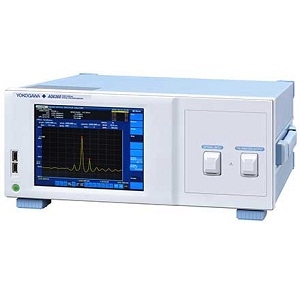
Equipment includes a 980 nm pump laser, WDM coupler, Er-doped fiber, polarization-insensitive optical isolator, 80/20 coupler, polarization controller, carbon nanotube saturable absorber, polarization beam splitter, optical spectral analyzer (YOKOGAWA:AQ6370C), and a photodetector (Tektronix, MSO4104).
4:4). Experimental Procedures and Operational Workflow:
4. Experimental Procedures and Operational Workflow: The mode-locking state is achieved at a pump power of
5:87 mW. The output spectrum and autocorrelation trace are recorded to analyze the soliton operation. Data Analysis Methods:
The optical spectrum and pulse train are analyzed using an optical spectral analyzer and oscilloscope, respectively, to determine the soliton characteristics.
独家科研数据包,助您复现前沿成果���,加速创新突破
获取完整内容