研究目的
Investigating the distortion of interferometric signal in semiconductor lasers with current modulation and the effect of thermal stabilization on signal modulation.
研究成果
The research provided insights into the distortion of interferometric signals in semiconductor lasers with current modulation, identifying time delays between amplitude and phase modulation and the impact of thermal stabilization. These findings contribute to more accurate signal models and potential improvements in demodulation algorithms and compensation for spurious amplitude modulation.
研究不足
The study was limited by the transient effects observed when thermal stabilization was turned off, and the inability to track long-term evolution of oscillations due to constraints on turning off thermal stabilization for extended periods.
1:Experimental Design and Method Selection:
The study involved refining a mathematical model of the interferometric signal based on experimental data, focusing on harmonic and triangular auxiliary modulation.
2:Sample Selection and Data Sources:
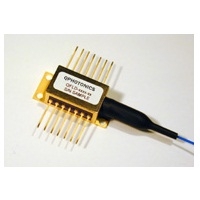
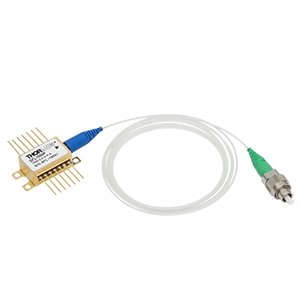
Two types of semiconductor lasers were used: a distributed feedback laser (QPhotonics QDFBLD-1550-50) and an external cavity laser (Thorlabs SFL-1550P).
3:List of Experimental Equipment and Materials:
The setup included a semiconductor laser controlled by a laser driver, a Mach-Zander interferometer, an adjustable optical attenuator, and a photodetector.
4:Experimental Procedures and Operational Workflow:
The laser's current modulation signal was applied from a generator to the laser driver, with optical emission transmitted to the interferometer. The signal from the interferometer was recorded on ADC and processed.
5:Data Analysis Methods:
The study analyzed the time delay between amplitude and phase modulation and the effect of thermal stabilization on signal modulation.
独家科研数据包���,助您复现前沿成果���,加速创新突破
获取完整内容