研究目的
To develop a theranostic system based on semiconducting polymer nanoparticles (L1057 NPs) for NIR-II fluorescence imaging and photothermal therapy (PTT) under safe laser fluence, addressing the challenge of insufficient effective NIR-II brightness and excellent photothermal properties in current systems.
研究成果
The study concludes that L1057 NPs are an excellent theranostic system for NIR-II imaging and PTT under safe laser fluence, with high effective NIR-II brightness, good stability, and excellent biocompatibility. The findings suggest that L1057 NPs have great potential for a wide range of biomedical applications.
研究不足
The study acknowledges the challenge of developing biocompatible NIR-II contrast agents with sufficient effective NIR-II brightness for imaging and high photothermal properties for PTT under safe laser fluence. The limitations include the need for further optimization of the L1057 NPs for clinical applications.
1:Experimental Design and Method Selection:
The study involved the synthesis of a semiconducting polymer (PTQ) and its encapsulation into nanoparticles (L1057 NPs) for biomedical applications.
2:Sample Selection and Data Sources:
The study utilized L1057 NPs for in vitro and in vivo experiments, including whole-body imaging, brain angiography, and tumor detection.
3:List of Experimental Equipment and Materials:
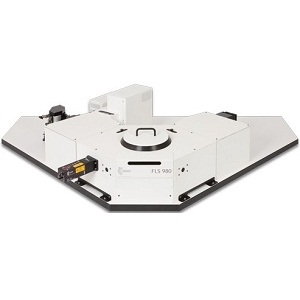
Equipment included a Bruker Avance III 400 MHz NMR spectrometer, JEOL JEM-2100 electron microscope, Shimadzu UV-1750 spectrometer, and Edinburgh instruments FLS
4:Materials included PTQ, DSPE-PEG2000, and IR26 dye. Experimental Procedures and Operational Workflow:
9 The study involved the synthesis of PTQ, preparation of L1057 NPs, characterization of their optical properties, and evaluation of their performance in NIR-II imaging and PTT.
5:Data Analysis Methods:
The study employed fluorescence imaging, photothermal imaging, and statistical analysis to evaluate the performance of L1057 NPs.
独家科研数据包,助您复现前沿成果���,加速创新突破
获取完整内容