研究目的
Investigating the dynamic morphology evolution of potassium chloride (KCl) crystal controlled by optical trapping with a focused continuous-wave near-infrared laser at an air/solution interface.
研究成果
The study successfully demonstrated the dynamic control of KCl crystal morphology using surface optical trapping. The formation of a dense cluster domain prior to nucleation was identified as a key factor in determining crystal morphology. The method's spatiotemporal controllability allows for real-time observation of crystal morphology evolution, providing new insights into laser-induced crystallization of isotropic objects.
研究不足
The study is limited to low supersaturation conditions of KCl in D2O. The local temperature elevation due to laser irradiation, although minimal, could influence the results. The mechanism of laser polarization-dependent morphology evolution is not fully understood.
1:Experimental Design and Method Selection
The study utilized surface optical trapping with a focused continuous-wave near-infrared laser to trigger and observe the dynamic change in KCl crystal morphology in real time. The methodology included the use of a Nd3+:YVO4 laser for trapping and an inverted microscope for observation.
2:Sample Selection and Data Sources
KCl (J.T. Baker, >99%) and D2O (Sigma-Aldrich, >99%) were used as solute and solvent, respectively. The sample solution was prepared by dissolving 0.30 g of KCl into 1.0 g of D2O, under low supersaturation conditions.
3:List of Experimental Equipment and Materials
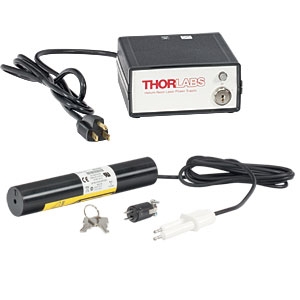
Inverted microscope (Olympus IX 71), Nd3+:YVO4 laser (Coherent, Matrix 1064), objective lens (Olympus, UPLFN 60×, N.A = 0.90), CCD video camera (Watec Co., Ltd., WAT-231S2), Visible He-Ne laser (Thorlabs, HNL020L).
4:Experimental Procedures and Operational Workflow
The laser was focused at an air/solution interface of the KCl solution. The power of the trapping laser was varied from 0.4 to 1.4 W, and both linearly-polarized (LP) and circularly-polarized (CP) light were used. Crystallization behavior and dynamic change of crystal morphology were monitored and recorded in real time.
5:Data Analysis Methods
The dynamics and mechanism of crystal morphology change were analyzed based on the reflection intensity at the air/solution interface and the observed crystal morphologies under different laser powers and polarizations.
独家科研数据包���,助您复现前沿成果,加速创新突破
获取完整内容