研究目的
Investigating the effect of laser beam incidence angle on cladding morphology in the laser cladding process.
研究成果
The study successfully established a quantitative numerical prediction model for cladding layer geometry that considers the laser incidence angle. The model's predictions were validated through experiments, showing good agreement. The findings indicate that controlling the laser incidence angle can effectively influence the cladding layer's morphology, providing a theoretical reference for laser cladding complex surface and inner hole parts.
研究不足
The study is limited to the range of laser incidence angles from 50° to 90° and does not consider angles less than 50° due to significant deterioration in the quality of the formed morphology. The thermal physical properties of the material and the fixed value of the effective utilization rate of the powder used in the simulation may also introduce errors.
1:Experimental Design and Method Selection:
A quantitative numerical prediction model for cladding layer geometry was established, considering the variation of θ, the laser energy attenuation rate, and the temperature rise of the powder particles.
2:Sample Selection and Data Sources:
The model material is Q235, and Fe#1 powder was used for cladding.
3:List of Experimental Equipment and Materials:
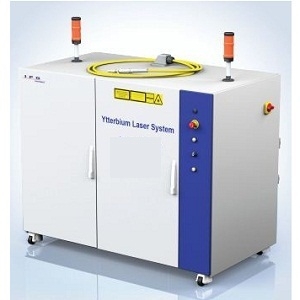
IPG fiber laser YLS-4000-S2, KUKA six-degree-of-freedom tandem robot KR30HA, negative pressure air-borne powder feeding system, and a parabolic focusing lens with a focal length f = 600 mm.
4:Experimental Procedures and Operational Workflow:
Laser cladding experiments with different incident angles were carried out, and the geometry of the cladding layer was obtained with a scanning electron microscope (SEM).
5:Data Analysis Methods:
The simulation results were compared with the experimental results to verify the model's validity and reliability.
独家科研数据包�,助您复现前沿成果,加速创新突破
获取完整内容