研究目的
To develop machine-learning methods to learn correlations between thermal history and subsurface porosity for a variety of print conditions in laser powder bed fusion.
研究成果
The study demonstrates the usefulness of IR thermal histories in the development of ML models for defect formation in L-PBF. It illustrates an effective approach for developing ML models from small datasets using evolutionary algorithms for feature selection and simple classification algorithms. The methodology successfully correlates thermal histories to subsurface porosity formation, showing that monotonically decreasing thermal histories with a low maximum temperature are likely to be correlated with low porosity, while histories that start high, dip, and then later increase are more likely to indicate large porosity.
研究不足
The study is limited by the small number of available calibration data points, which may affect the robustness and predictive capability of the machine learning models. Additionally, the methodology may need re-calibration for other materials systems due to differences in material properties.
1:Experimental Design and Method Selection:
The study employs a combination of high-speed infrared imaging and synchrotron x-ray imaging to correlate thermal history with subsurface porosity formation in laser powder bed fusion.
2:Sample Selection and Data Sources:
Miniature powder bed samples consisting of a Ti-6Al-4V Grade 5 substrate and powder sandwiched between two glassy carbon plates were used.
3:List of Experimental Equipment and Materials:
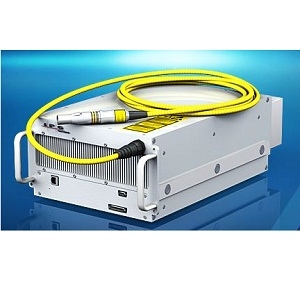
The setup includes a high-speed IR camera (Telops Fast M3K), a high-speed camera (Photron FastCam SA-Z), and an ytterbium fiber laser (IPG YLR-500-AC).
4:Experimental Procedures and Operational Workflow:
The laser scans a bed of metallic powder, melting the powder in the toolpath to form a solid component, layer by layer. Thermal signatures and porosity formation are monitored in real-time.
5:Data Analysis Methods:
Machine learning models are developed to correlate temperature histories to subsurface porosity formation, employing feature selection via genetic algorithms and classification algorithms including logistic regression, random forest classification, gradient boosting classification, and Gaussian process classification.
独家科研数据包,助您复现前沿成果��,加速创新突破
获取完整内容