研究目的
To develop a method for measuring the 3 dB frequency of separate spectral components of the electroluminescence spectrum of LEDs and to present a hardware-software complex for implementing this method.
研究成果
The developed method and hardware-software complex allow for the measurement of 3 dB frequencies and spectral quantum efficiencies of separate spectral components of LED electroluminescence spectra. This can be used for diagnosing LED quality and developing new light-emitting structures.
研究不足
The method requires precise control of current pulse frequency and integration time, and the sensitivity is dependent on the spectrometer's capabilities.
1:Experimental Design and Method Selection:
The method involves passing a series of current pulses through the LED and measuring the emission spectrum with a spectrometer. The 3 dB frequency is determined by the frequency at which the optical signal decreases 1.19 times relative to the level at a low frequency.
2:19 times relative to the level at a low frequency.
Sample Selection and Data Sources:
2. Sample Selection and Data Sources: Commercial green InGaN-based LEDs are used, with current ranges from 10-5 to 10-2 A and frequency ranges from 0.001 to 10 MHz.
3:001 to 10 MHz.
List of Experimental Equipment and Materials:
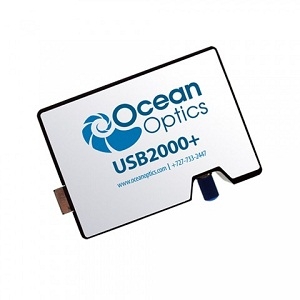
3. List of Experimental Equipment and Materials: OceanOptics USB2000+ spectrometer, AKIP 3420/3 generator for current pulses.
4:Experimental Procedures and Operational Workflow:
The LED is powered by current pulses, and the EL spectrum is recorded at increasing pulse frequencies until the signal decreases by 1.19 times.
5:19 times.
Data Analysis Methods:
5. Data Analysis Methods: The RMS value of the optical signal is used to determine the 3 dB frequency, and spectral quantum efficiencies are calculated.
独家科研数据包�����,助您复现前沿成果���,加速创新突破
获取完整内容