研究目的
To propose a new blood flow imaging (BFI) technique using digital holography with double illumination of the sample for 3D imaging of moving red blood cells (RBCs) in a living zebrafish embryo.
研究成果
The proposed method represents an alternative to previously proposed techniques, with a larger angle of separation of the two illumination beams and easier spatial displacement of the sample. Future work includes solving the coincidence plane issue and increasing the angle diversities of the 3D reconstruction to the whole rotational range (360 degrees).
研究不足
The main issue is the identification of the coincidence plane in which both the contributions meet. Once this issue is solved, the reconstruction process will be fast and effective.
1:Experimental Design and Method Selection:
The study uses a digital holography setup with an off-axis configuration and dual illumination of the sample. Two microscope objective lenses are used with a 90-degree angle of separation between the two illumination beams.
2:Sample Selection and Data Sources:
Zebrafish larvae (Danio rerio, wild type AB line) were used as samples, embedded in a drop of cooling 1.5% low melting point agarose and mounted in a transparent FEP tube.
3:5% low melting point agarose and mounted in a transparent FEP tube.
List of Experimental Equipment and Materials:
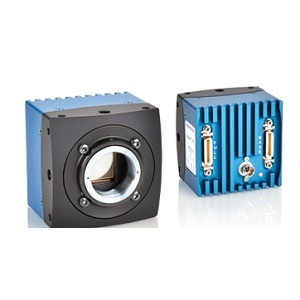
3. List of Experimental Equipment and Materials: Laser diode (HL6545MG), beam splitter (BS), acousto-optic modulators (AOM1, AOM2), water-based microscopic objectives (NA = 0.30, G = 10), Mikrotron Eosens CL camera, cubic aluminum chamber, FEP tube.
4:30, G = 10), Mikrotron Eosens CL camera, cubic aluminum chamber, FEP tube.
Experimental Procedures and Operational Workflow:
4. Experimental Procedures and Operational Workflow: The sample was illuminated from two different directions, and holograms were captured using the camera. The setup allowed for easy rotation and displacement of the sample.
5:Data Analysis Methods:
The holograms were reconstructed using the Schnars et al. method, and the intensity images of RBCs were analyzed using particle tracking techniques.
独家科研数据包,助您复现前沿成果����,加速创新突破
获取完整内容