研究目的
To develop a novel down-converting phosphor Lu2GeO5: Bi3+, Yb3+ with near-infrared quantum cutting to improve the photoelectric conversion efficiency of silicon-based solar cells by enhancing energy transfer and quantum yield.
研究成果
The research successfully demonstrates a high energy transfer efficiency of 65% and theoretical quantum yield of 165% in Lu2GeO5: Bi3+, Yb3+ phosphor, with excellent thermal stability. This phosphor is promising for enhancing silicon-based solar cell efficiency through near-infrared quantum cutting, with recommendations for future work on practical applications and reducing non-radiative losses.
研究不足
The study may have limitations in scalability for industrial applications, potential impurities in synthesized samples affecting properties, and the theoretical quantum yield not fully achievable due to non-radiative losses and concentration quenching. Optimization of doping concentrations and further stability tests under real solar cell conditions could be areas for improvement.
1:Experimental Design and Method Selection:
The study uses solid-state synthesis to prepare phosphor samples, with photoluminescence spectroscopy to analyze energy transfer and quantum cutting. Theoretical models include Dexter's energy transfer theory for mechanism analysis.
2:Sample Selection and Data Sources:
Samples are synthesized with varying concentrations of Bi3+ and Yb3+ in Lu2GeO5 host, using raw materials like Lu2O3, GeO2, Yb2O3, and Bi2O3 of high purity (99.99% or higher).
3:99% or higher).
List of Experimental Equipment and Materials:
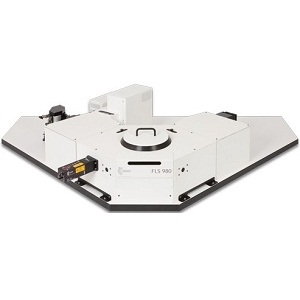
3. List of Experimental Equipment and Materials: X-ray diffractometer (BRUKER D8 ADVANCE), spectrophotometer (Edinburgh Instruments FLS 920), quantum yield measurement system (Hamamatsu C9920-02), fluorospectrometer (Jobin Yvon Triax 320), and a homemade high-temperature sample heater. Materials include oxides of lutetium, germanium, ytterbium, and bismuth.
4:Experimental Procedures and Operational Workflow:
Raw materials are weighed, ground, calcined at 773 K for 8 h, reground, recalcined at 1573 K for 5 h in air, cooled, and reground. Characterization involves XRD for phase purity, PLE/PL spectra, decay curves, temperature-dependent PL, and quantum yield measurements.
5:Data Analysis Methods:
Data analyzed using single and bi-exponential decay fittings, Arrhenius equation for thermal stability, and Dexter's theory for energy transfer mechanism. Software tools not specified.
独家科研数据包����,助您复现前沿成果,加速创新突破
获取完整内容