研究目的
To study ultrahigh-precision distance measurement using a laser frequency comb and VIPA interferometry, with a focus on numerical simulations and proposing an improved scheme for real-time signal comparison to enhance accuracy and precision.
研究成果
The numerical simulations demonstrate that the proposed VIPA-based interferometry system with real-time signal comparison can achieve high-resolution distance measurements, ranging from sub-nanometer to kilometers, with picometer-scale resolution in optimal cases. The approach effectively eliminates noise from comb intensity fluctuations, offers a large non-ambiguity range, and has potential applications in ultra-high precision metrology, though experimental verification is needed.
研究不足
The study is numerical and does not include experimental validation. Limitations include assumptions of ideal conditions (e.g., refractive index of 1), potential uncertainties from data processing (e.g., read-out noise, fitting errors), and reliance on specific component parameters that may not be universally applicable. The method requires a rough pre-measurement for distances beyond half the pulse-to-pulse distance, and performance may be affected by environmental factors like air refractive index in non-vacuum conditions.
1:Experimental Design and Method Selection:
The study employs numerical simulations based on theoretical models of VIPA interferometry and grating diffraction. The design includes a Michelson interferometer with a frequency comb source and a VIPA-based spectrometer for high-resolution spectral analysis.
2:Sample Selection and Data Sources:
Simulations use parameters from an existing lab system, including a Yb:fiber ring laser frequency comb with a repetition frequency of 810 MHz and wavelengths from 755-765 nm.
3:List of Experimental Equipment and Materials:
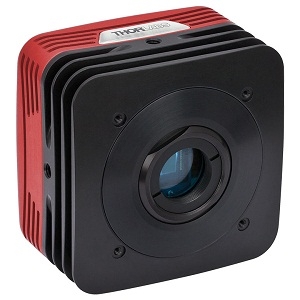
Includes a laser frequency comb, VIPA with specific reflectivity and free spectral range, blazed grating (1800 lines/mm, blazed wavelength 720 nm), cylindrical and spherical lenses (focal lengths 700 mm and 1000 mm), CCD camera (e.g., 8 megapixel monochrome), polarizers, beam splitters, mirrors, and retro reflectors.
4:Experimental Procedures and Operational Workflow:
The process involves simulating the interference patterns on a CCD camera by calculating intensity distributions using derived equations for VIPA and grating dispersion. Real-time comparison of reference and interference signals is achieved by shifting the reference beam.
5:Data Analysis Methods:
Data is analyzed by fitting cosine functions to the intensity ratios of interference and reference signals, using linear fits to extract distance information, with uncertainty calculations based on system parameters.
独家科研数据包����,助您复现前沿成果,加速创新突破
获取完整内容