研究目的
To propose and investigate a refractive index sensor based on a tapered no cladding fiber structure for high sensitivity in biosensing applications, particularly at low surrounding refractive index ranges.
研究成果
The tapered SNS fiber sensor demonstrates high refractive index sensitivity, particularly at low SRI ranges, with a maximum sensitivity of 686 nm/RIU achieved at a waist diameter of 13 μm. The diameter of the waist is identified as the critical factor influencing sensitivity, while length has minimal effect. This sensor is promising for biosensing due to its simplicity, high sensitivity, and robustness, with potential for further enhancement through surface coatings.
研究不足
The sensor's sensitivity is lower at SRI ranges below 1.367, requiring very small waist diameters (below 30 μm) for high sensitivity, which may complicate fabrication. The study is limited to urea solutions and room temperature conditions; potential variations with other liquids or environmental factors are not explored. Coating with functional materials for enhanced sensitivity is suggested but not implemented in this work.
1:Experimental Design and Method Selection:
The study involves theoretical simulations using the Beam Propagating Method (BPM) based on scalar Helmholtz equation to model optical field and transmission spectra, and experimental fabrication of SNS (single-mode no cladding single-mode) fiber structures with tapering to reduce waist diameter. The principle relies on multimode interference for refractive index sensing.
2:Sample Selection and Data Sources:
Six SNS fiber sensors were fabricated with NCF (Fud-3582, Nufern) of 2 cm length and varying waist diameters (13 μm, 20 μm, 30 μm, 40 μm, 80 μm, 125 μm). Urea solutions of different concentrations (0.2 to 8 M/mL) were used as samples with known refractive indices (1.334 to 1.399).
3:2 to 8 M/mL) were used as samples with known refractive indices (334 to 399).
List of Experimental Equipment and Materials:
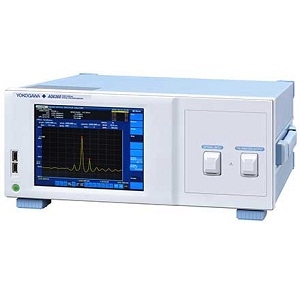
3. List of Experimental Equipment and Materials: Equipment includes a CO2 laser splicing machine (LZM-100, Fujikura) for tapering, broadband light source (BBS), optical spectrum analyzer (OSA, AQ6370, Yokogawa), groove device made of PMMA for solution packaging, and holders for fiber straightening. Materials include single-mode fibers (SMF-28, Corning), no cladding fiber (NCF, Fud-3582, Nufern), and urea solutions.
4:Experimental Procedures and Operational Workflow:
Fabricate SNS structure by splicing NCF between two SMFs after removing coating; taper NCF using CO2 laser to achieve desired waist diameters; set up experimental system with BBS and OSA; immerse tapered part in urea solutions of varying concentrations; record transmission spectra for each solution; use MATLAB for data processing to find dip wavelengths.
5:Data Analysis Methods:
Analyze transmission spectra to observe wavelength shifts of dips; perform linear fitting on dip wavelength shifts vs. SRI for different waist diameters; calculate sensitivity in nm/RIU and R2 values for accuracy assessment.
独家科研数据包�����,助您复现前沿成果����,加速创新突破
获取完整内容