研究目的
To improve the response performance of GO-based aptasensors by developing an aptamer truncating strategy to remove extraneous nucleotides, thereby enhancing binding affinity and structural transformation upon target binding for better detection of mycotoxins like AFB1 and OTA.
研究成果
The aptamer truncating strategy successfully improved the performance of GO-based aptasensors by removing extraneous nucleotides, leading to enhanced fluorescence output and lower detection limits for mycotoxins like AFB1 and OTA. The method is versatile and applicable to multiple aptamer systems, enabling simultaneous multiplex detection in a single test, which is significant for rapid, low-cost on-site analysis and food safety monitoring.
研究不足
The study may be limited by the specificity of the aptamers to other interfering substances in complex matrices, and the need for further validation in diverse real-world samples. Optimization of GO concentration and aptamer ratios for multiplex detection could be refined for broader applicability.
1:Experimental Design and Method Selection:
The study employed an aptamer truncating strategy to systematically remove extraneous nucleotides from original aptamers (e.g., P-AFB1-50 and P-OTA-61) using circular dichroism (CD) spectroscopy and binding affinity analysis. The quenching constant ratio between GO sheets and truncated aptamers in the absence and presence of targets was used to evaluate optimal sequences. Methods included CD spectroscopy for structural analysis, fluorescence titration for binding constant determination, and fluorescence quenching studies for quenching constant calculation.
2:Sample Selection and Data Sources:
Aptamers were synthesized and purified by Sangon Biotechnology Inc. Mycotoxins (AFB1, OTA) and other reagents were purchased from commercial sources. Real-world samples included spiked white wine for practical application testing.
3:List of Experimental Equipment and Materials:
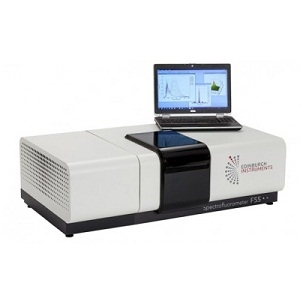
Equipment included a Chirascan CD spectrometer (Applied Photophysics, Ltd.), FL spectrometer (Model FS5, Edinburgh Instruments), and Barnstead Easypure System for deionized water. Materials included graphene oxide (50-200 nm from Nanjing XFNano Materials Tech Co., Ltd), fluorophore-labelled aptamers (FAM and Texas Red), mycotoxins (AFB1 from Fermentek Ltd, OTA from Aladdin Industrial, Inc.), and buffers (Tris-HCl).
4:Experimental Procedures and Operational Workflow:
Aptamers were annealed before use. CD spectra were recorded in a deoxygenated chamber. Fluorescence titration involved mixing aptamers with targets and measuring fluorescence changes. Quenching studies involved mixing aptamers or aptamer-target conjugates with GO and recording fluorescence spectra. GO concentration was optimized, and aptasensors were constructed for detection and multiplex assays.
5:Data Analysis Methods:
Binding constants (Ka) were determined via Scatchard analysis of fluorescence titration curves. Quenching constants (Kp) were calculated using the equation ln(F0/F) = Kp[Q]. Detection limits were calculated using the "3σ/b" rule. Statistical analysis included three replicates for each sample.
独家科研数据包�,助您复现前沿成果,加速创新突破
获取完整内容