研究目的
To improve negative thermal quenching effect (TQE) in Yb3+ sensitized fluoride upconversion nanocrystals by using an active-core/active-shell structure with high total Yb3+ doping content to enhance the absorption intensity of Er3+ ions and enable energy migration from activators to surface defects.
研究成果
The active-core/active-shell architecture with high Yb3+ doping content significantly enhances the negative thermal quenching effect in upconversion nanocrystals by increasing the absorption intensity of Er3+ ions and enabling more inhibited energy migration from activators to surface defects at higher temperatures. The 40Yb: NaGdF4@60Yb/2Er: NaGdF4 NCs showed an 8.24-fold increase in UC emission intensity from 293 K to 413 K, outperforming lower Yb3+ doped samples. This approach also achieved a high relative temperature sensitivity of 0.87 % K-1, demonstrating potential for applications in thermal sensing and stable light-emitting devices.
研究不足
The enhancement degree of UC emission intensity decreases at temperatures above 433 K due to increased multi-phonon assisted non-radiative electron relaxation. High Yb3+ doping in core-shell structures may lead to formation of cubic NaYbF4 phase impurities at certain concentrations, potentially affecting crystal purity and performance.
1:Experimental Design and Method Selection:
The study employs a co-precipitation method to synthesize Yb: NaGdF4@Yb/Er: NaGdF4 core-shell nanocrystals with varying Yb3+ doping concentrations. The design rationale is to use an active-core/active-shell architecture to increase total Yb3+ content without passivating Er3+ activators, thereby enhancing the negative thermal quenching effect through controlled energy migration processes.
2:Sample Selection and Data Sources:
Core NCs (NaGdF4, 20Yb: NaGdF4, 40Yb: NaGdF4) and core-shell NCs (xYb: NaGdF4@yYb/2Er: NaGdF4 with x=0,20,40 and y=20,40,60) were synthesized. Selection criteria included varying Yb3+ doping levels in core and shell to study their impact on thermal quenching.
3:List of Experimental Equipment and Materials:
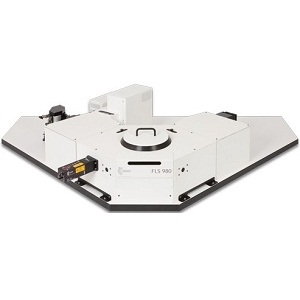
Materials: gadolinium acetate (Gd(Ac)3), ytterbium acetate (Yb(Ac)3), erbium acetate (Er(Ac)3), sodium hydroxide (NaOH), ammonium fluoride (NH4F), oleic acid (OA), 1-octadecene (ODE), cyclohexane, ethanol. Equipment: Three-necked flask, heating mantle, centrifuge, powder diffractometer (Bruker D8 Advance), field emission transmission electron microscopy (TEM, FEI Tecnai G2 F20), energy dispersive X-ray spectroscope (EDS, Aztec X-Max 80T), spectrofluorimeter (Edinburgh Instruments FLS920) with adjustable laser diode (980 nm) and temperature controlling stage.
4:Experimental Procedures and Operational Workflow:
Synthesis involved heating raw chemicals with OA and ODE, adding methanol solution of NH4F and NaOH, heating at specific temperatures (e.g., 280°C under N2 for 90 min), centrifugation, washing, and drying. Core-shell structures were formed by adding pre-prepared core NCs to shell precursor solutions and repeating heating steps. Characterization included XRD, TEM, HRTEM, EDS, and temperature-dependent UC emission measurements.
5:Data Analysis Methods:
XRD patterns were compared to standard NaGdF4 phase (JCPDS No. 27-0699). TEM images were used for size distribution analysis. UC emission spectra were analyzed for integral intensity changes with temperature. Fluorescence intensity ratio (FIR) for temperature sensing was calculated using FIR = I525/I545 = A exp(-ΔE/kT) + C, and relative temperature sensitivity (Sr) was derived from Sr = d(FIR)/dT / FIR.
独家科研数据包�,助您复现前沿成果,加速创新突破
获取完整内容